
Last updated September 19, 2026
Full 25-point door and opener safety check with every visit - springs, cables, rollers, tracks, and your LiftMaster or Chamberlain opener included
You get a price before we start. It does not change when the truck arrives.
 Before
 After
After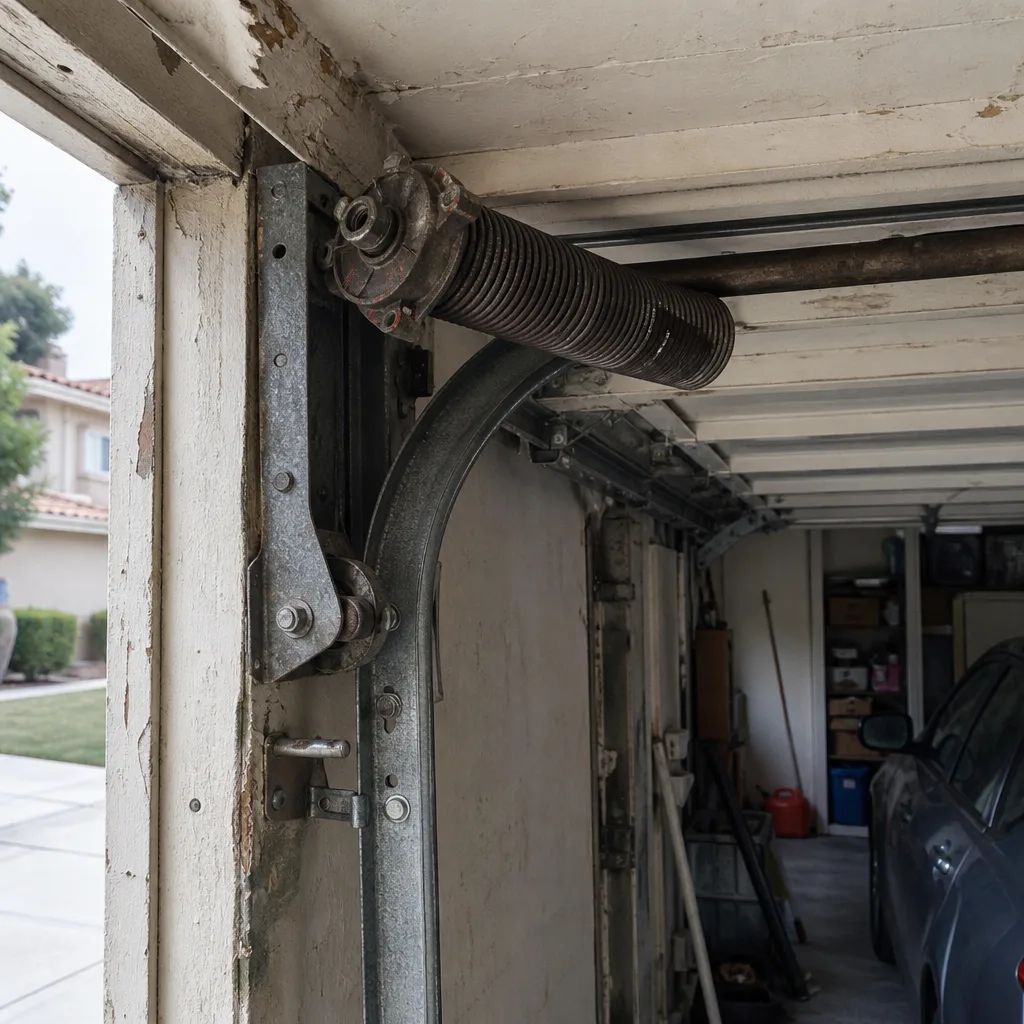 Before
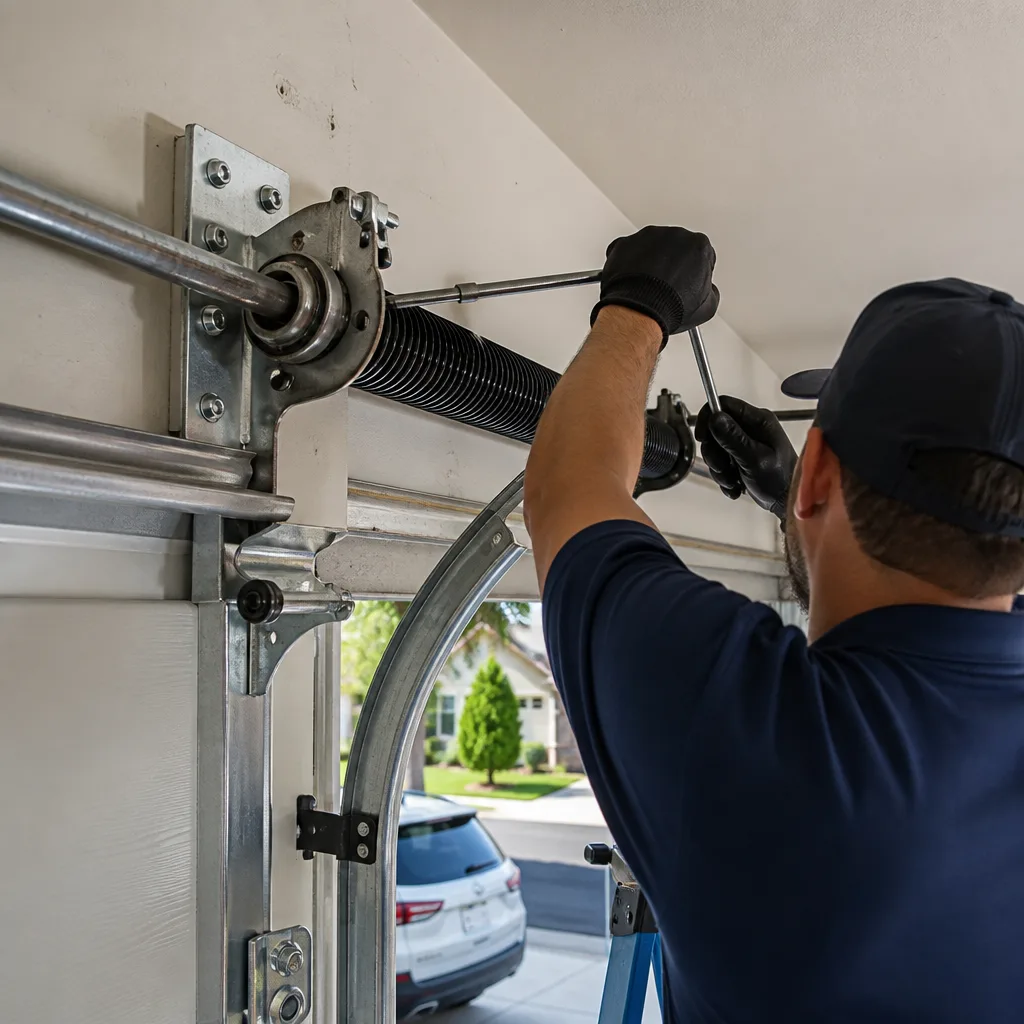 After
AfterGarage Door Repair Maintenance Checklist for Irvine Homeowners
Here’s a number that surprises most Irvine homeowners: we replace more torsion springs in October than in any other month. The break didn’t happen because something changed in fall. It happened because the summer heat cycle, those weeks of 90-degree afternoons and 60-degree nights inside an uninsulated attached garage, accelerates metal fatigue in the spring coil. The spring finally snaps when the door goes back into heavy daily use after vacation season. This guide is built from a decade of Garage Door Repair service records across Irvine, not a national template, and it covers the checks that actually prevent those October calls.
Quick Answer
A garage door maintenance checklist for Irvine homeowners should cover four seasonal tasks: a visual inspection of springs, cables, and rollers every three months; a lubrication pass on hinges, rollers, and the torsion shaft twice a year; a seal and weatherproofing check before the rainy season; and a door balance test every six months. The Irvine-specific failures we see most often are UV-degraded bottom seals, corrosion on torsion hardware near the coast, and operator circuit boards that fail from summer heat soak in attached garages. Each check below takes under ten minutes and costs less than $30 in supplies per year.
Table of Contents
- The Quarterly Visual Inspection: What to Look At, in Order
- The Door Balance Test: Measuring Spring Tension Without Touching the Spring
- The Irvine Seal Check: UV Degradation and Why Your Bottom Seal Cracks in August
- Lubrication Schedule: What to Lubricate, What to Leave Alone
- Track Fastener Torque: Irvine’s Thermal Cycling Loosens Lag Bolts
- Operator Heat Management: Keeping the Logic Board Alive Through Summer
- The Paper-Record Column: What to Log After Every Inspection
- Common Mistakes to Avoid
- When to Call a Professional
- Frequently Asked Questions
BeforeAfterThe Quarterly Visual Inspection: What to Look At, in Order
Set a repeating calendar reminder for the first weekend of January, April, July, and October. Walk into the garage with the door fully closed and work top to bottom. This order matters because it catches the failures that cascade: a worn spring breaks, the door drops, the cable snaps, and the panel folds. The goal is to catch the spring before it takes the cable with it.
Here is the sequence we teach Irvine homeowners who want to do their own quarterly checks:
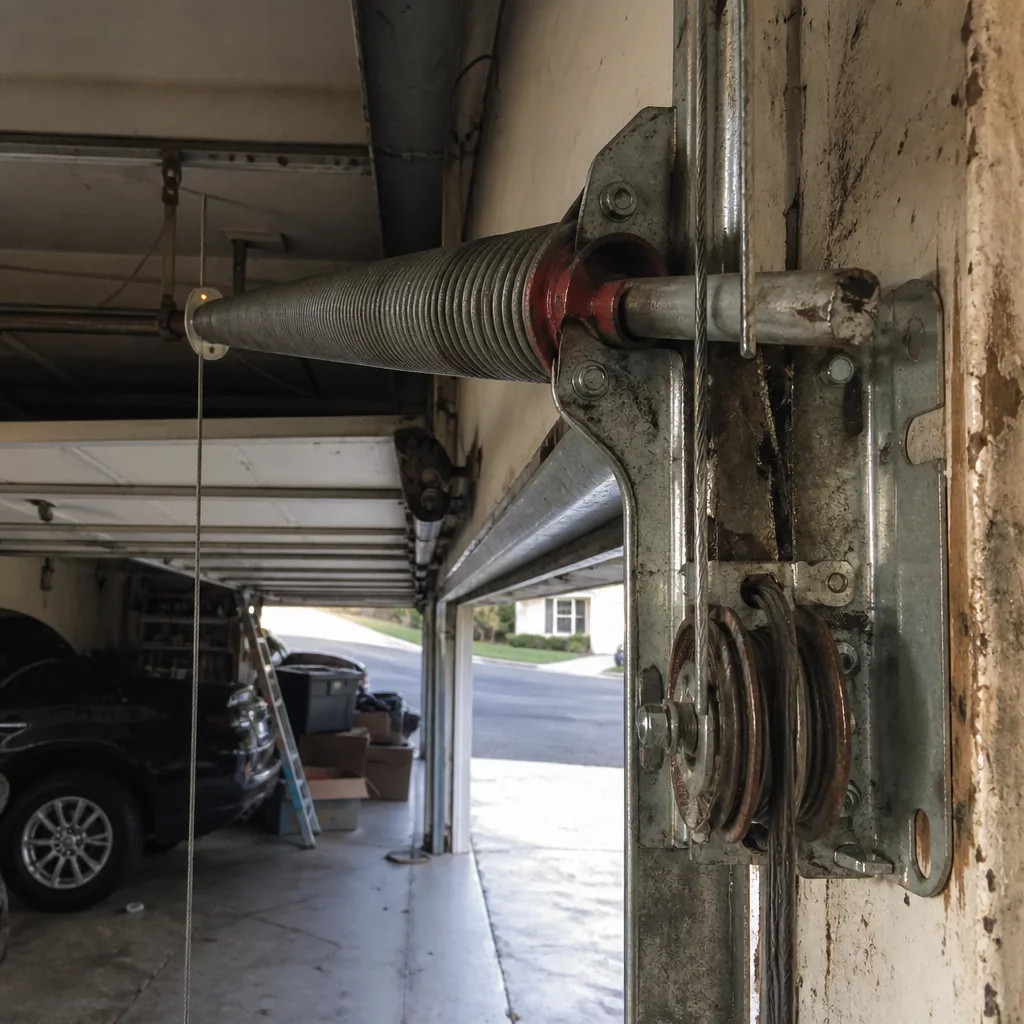
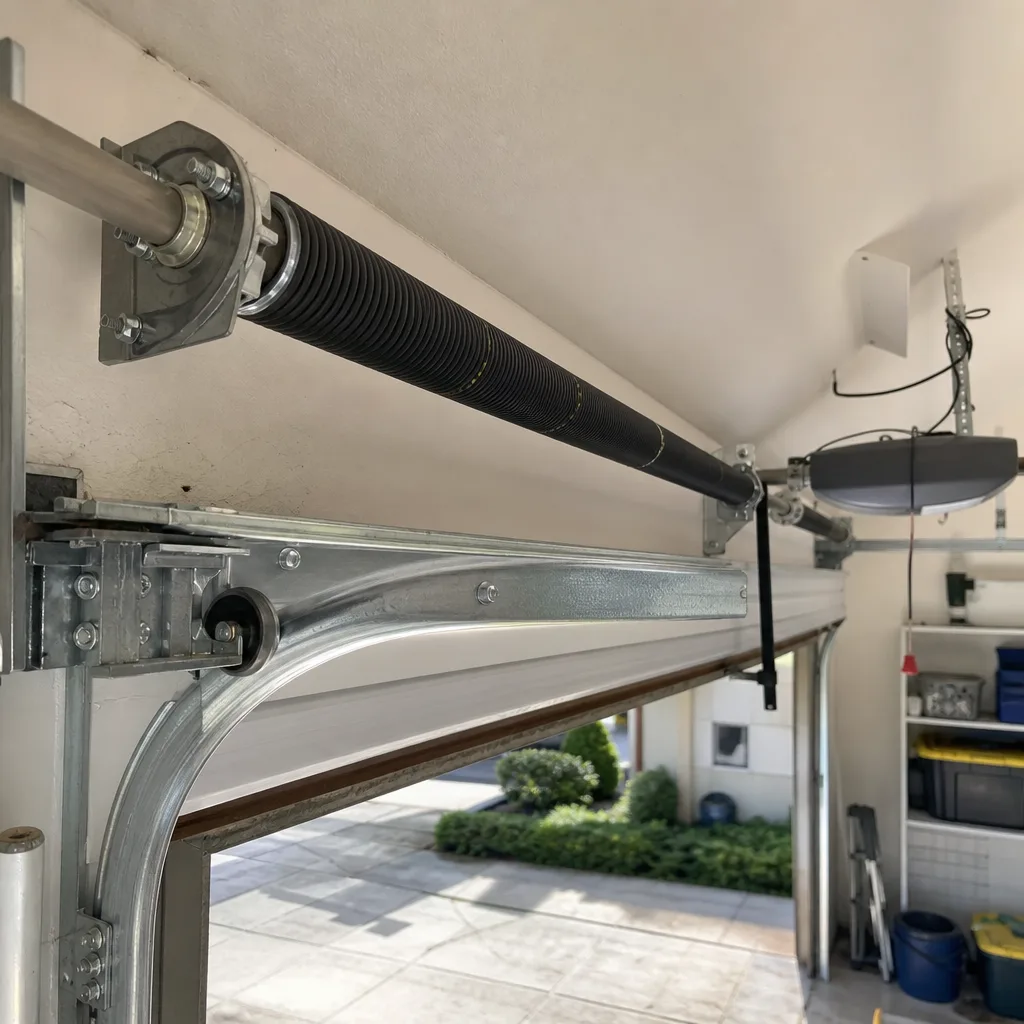
- Torsion springs. Look at the coil spacing. A healthy spring has even gaps between coils. If you see a gap that’s noticeably wider than the others, the spring has taken a permanent set and is losing tension. Run a bare finger an inch above the coil (do not touch it) to feel for surface rust that flakes. In Irvine’s coastal-adjacent zip codes, light surface rust on torsion springs is normal from marine-layer humidity; pitting is not.
- Lift cables. The two steel cables that run from the bottom brackets up to the drum should be taut when the door is closed. Look for fraying where the cable wraps the drum at the top. A frayed cable is a broken cable waiting for the worst possible moment.
- Rollers. Roll with nylon tires should be smooth and round. Steel rollers should be rust-free. A roller with a flat spot or visible wobble puts lateral load on the track and wears the hinge tube.
- Hinges. Check the hinge screws, especially on the bottom two panels. These take the most load when the door transitions from vertical to horizontal track. A loose hinge lets the panel sag and binds the door.
- Bottom seal. Run your hand along the rubber strip at the bottom of the door. Irvine sun degrades EPDM rubber faster than the manufacturer’s lifespan chart suggests. If it feels stiff or shows cracks, replace it before winter rain.
- Safety sensors. Clean the lenses on the photo eyes near the floor, both sides, with a dry microfiber cloth. Dust and spider silk are the two most common causes of a door that reverses for no reason.
We’ve written more detail about what our technicians inspect on a standard service call in our Garage Door Repair in Irvine guide. What matters for a homeowner checklist is consistency: the same eyes, the same order, every quarter, so you notice when something changes.
The Door Balance Test: Measuring Spring Tension Without Touching the Spring
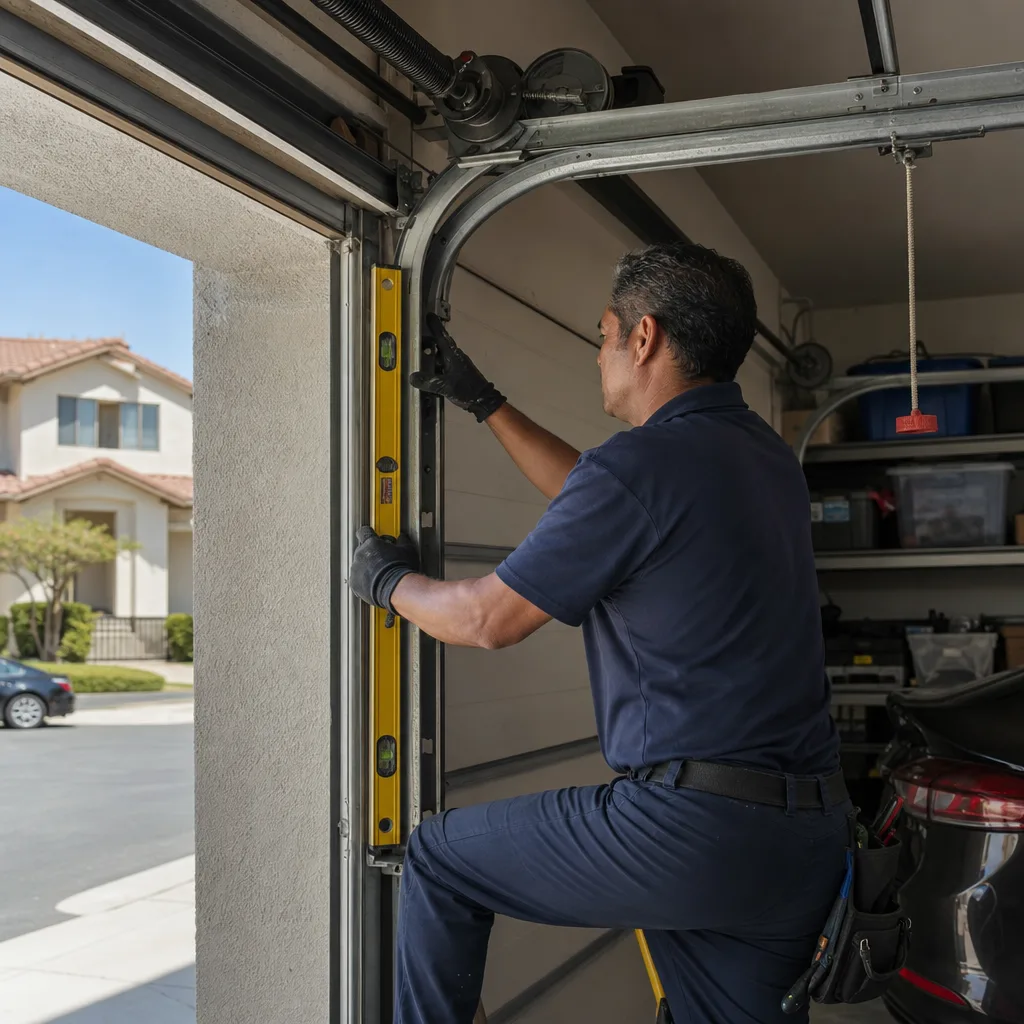
You can measure the health of your torsion springs without ever putting a hand on them. The test takes under two minutes and tells you more than a visual check alone. Here is the procedure we recommend for every Irvine homeowner:
- Close the door completely.
- Pull the red emergency release handle. This disconnects the door from the operator carriage.
- Lift the door manually to waist height using the handle or the bottom rail. Use your legs, not your back. The door should feel light, roughly 8 to 12 pounds of lift effort.
- Release the door. A properly balanced door stays put at waist height. If it drops more than a few inches, the springs have lost tension and are doing less work than the door weight requires. If it flies upward, the springs are over-tensioned.
- Reconnect the door to the operator by pulling the release handle back toward the motor and running the opener until the carriage re-engages.
What the test tells you: torsion springs are rated for 10,000 cycles, not years. A cycle is one open and one close. A household that opens the door four times a day racks up roughly 1,460 cycles per year. A ten-year-old spring in an Irvine home with two commuter cars is usually at or past its rated life. The balance test measures remaining tension, and tension loss is the earliest reliable indicator of a spring approaching failure. If the door drops faster than a few inches, call before the spring breaks. A broken spring leaves the full door weight on one cable, and that is how a minor maintenance item becomes a panel replacement.
The Irvine Seal Check: UV Degradation and Why Your Bottom Seal Cracks in August
The bottom weather seal on a garage door is made of EPDM rubber or vinyl. Manufacturers rate EPDM for five to seven years of outdoor exposure. In Irvine, we see cracking at year three to four. The reason is UV. Our clear-sky count is among the highest in coastal Southern California, and the afternoon sun hits the bottom panel of south-facing and west-facing garage doors directly for hours. The rubber oxidizes, loses plasticizer, and hardens. Then the first cold night of December contracts it, and it splits along the extrusion channel.
Check the seal twice a year, in April and again in September. Here is what to look for:
- Cracking along the fold. The seal is a T-shaped extrusion. The leg that hangs down flexes every time the door closes. Cracks form on the flex line first.
- Gaps at the corners. Even a 1/4-inch gap at either corner lets in warm air in summer, cold air in winter, and enough dust to coat everything stored in the garage.
- Stiffness. Bend the seal with your fingers. A healthy seal flexes like a rubber band. A seal near end of life bends like a credit card.
Replacement is a $20 to $40 part and takes about 20 minutes with the door raised halfway. We do this on many of our Garage Door Installation in Irvine projects as a matter of course, because a new door with an old seal is a false economy. For existing doors, it is the single highest-return maintenance item on this list in terms of energy cost and interior dust control.
Lubrication Schedule: What to Lubricate, What to Leave Alone
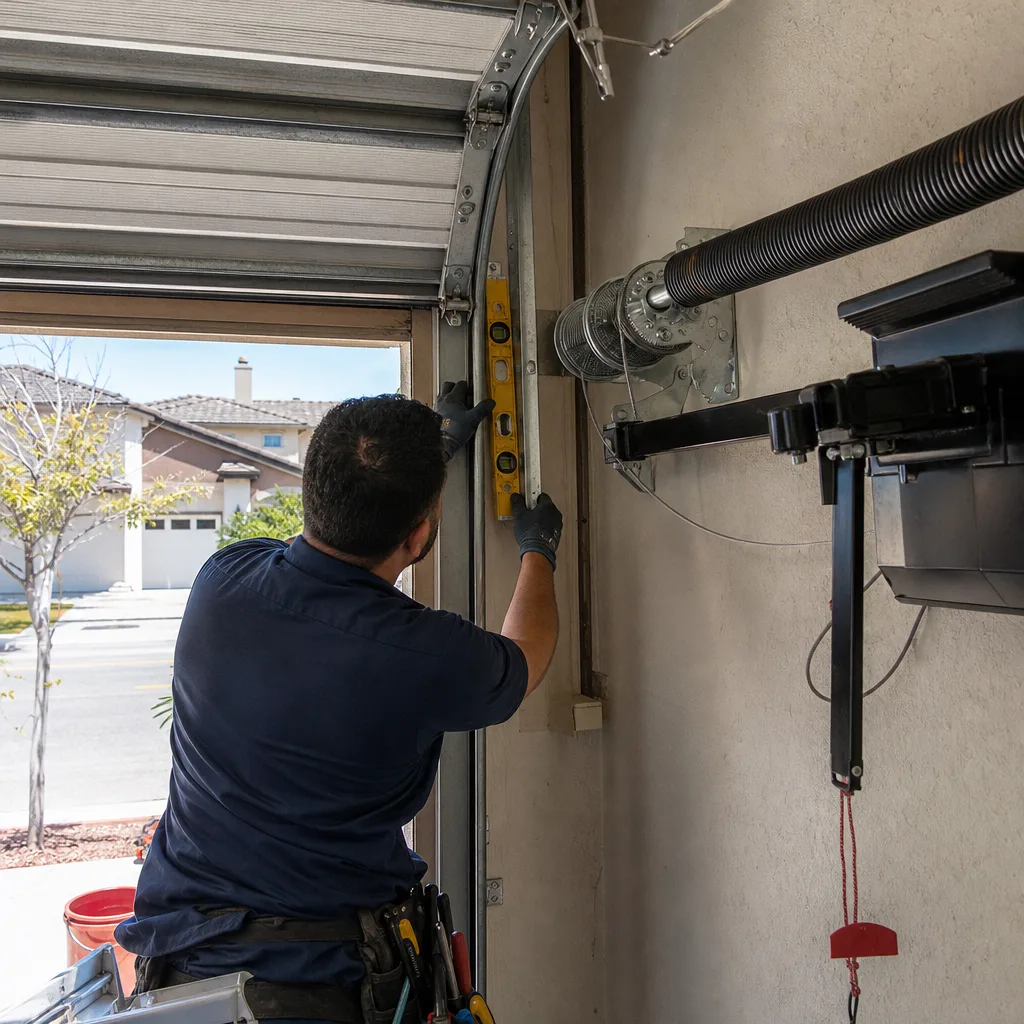
The single most common lubrication mistake we see in Irvine garages is oil on the track. The rollers do not ride on the track; they roll on the track edge. Oil on the track picks up dust, turns into a grinding paste, and wears the roller bearings and the track surface together. Leave the track dry and clean it with a rag instead.
Here is what actually needs lubrication, and how often:
- Roller bearings. Apply a spray lubricant with a PTFE or silicone base to the ball bearings inside each roller, not the wheel face. Rotate the roller by hand to work it in. Twice a year.
- Hinge pins. A drop of the same lubricant at each hinge pivot, top to bottom. Twice a year.
- Torsion shaft and spring. A light coat along the coil and the shaft. This slows surface rust, which is the second-biggest spring killer in Irvine after cycle fatigue. Twice a year, ideally after the balance test.
- Lift cable. A very light wipe with an oiled rag. The cable is under constant tension and a dry cable abrades against the drum. Once a year.
- Operator chain or belt. If you have a chain-drive opener, a light spray on the chain. Belt drives do not need lubrication. Check your operator manual first; some Chamberlain and LiftMaster models specify dry operation.
Product categories matter more than brand names. Use a spray with PTFE or white lithium for metal-on-metal points, and a silicone spray for anything with a nylon or plastic component. Do not use WD-40 as a lubricant; it is a solvent and degreaser that strips the existing lube film and leaves surfaces drier than before. A 10-ounce can of PTFE spray runs $8 to $14 at Irvine hardware stores and lasts most households two years.
Brands we service regularly, including Amarr, Wayne Dalton, and Raynor doors, all specify similar lubrication points. The differences between brands are in the roller material and hinge design, not in what needs lubricating. If your door is an older Craftsman or Raynor model with steel rollers, pay extra attention to the bearing points: steel-on-steel wears faster than nylon wheels and seizes if left dry through an Irvine summer.
Track Fastener Torque: Irvine’s Thermal Cycling Loosens Lag Bolts
Your garage door track is fastened to the wall and ceiling with lag bolts, typically 3/8-inch by 1-1/2 inches. Those bolts hold the track rigid so the door travels the same plane every cycle. In Irvine, the temperature swing between a January night and an August afternoon runs 40 degrees Fahrenheit or more across the metal components. Steel expands and contracts with every degree change, and wood framing expands at a different rate. The result is fastener creep: lag bolts slowly back out over months, and the track develops play that you can feel as a shudder when the door moves.
Check the fasteners twice a year, at the same time you lubricate:
- Get a socket wrench with a 9/16-inch or 14mm socket, depending on the bolt head.
- Place the wrench on each lag bolt along the vertical track, then the horizontal track, then the center bracket above the door.
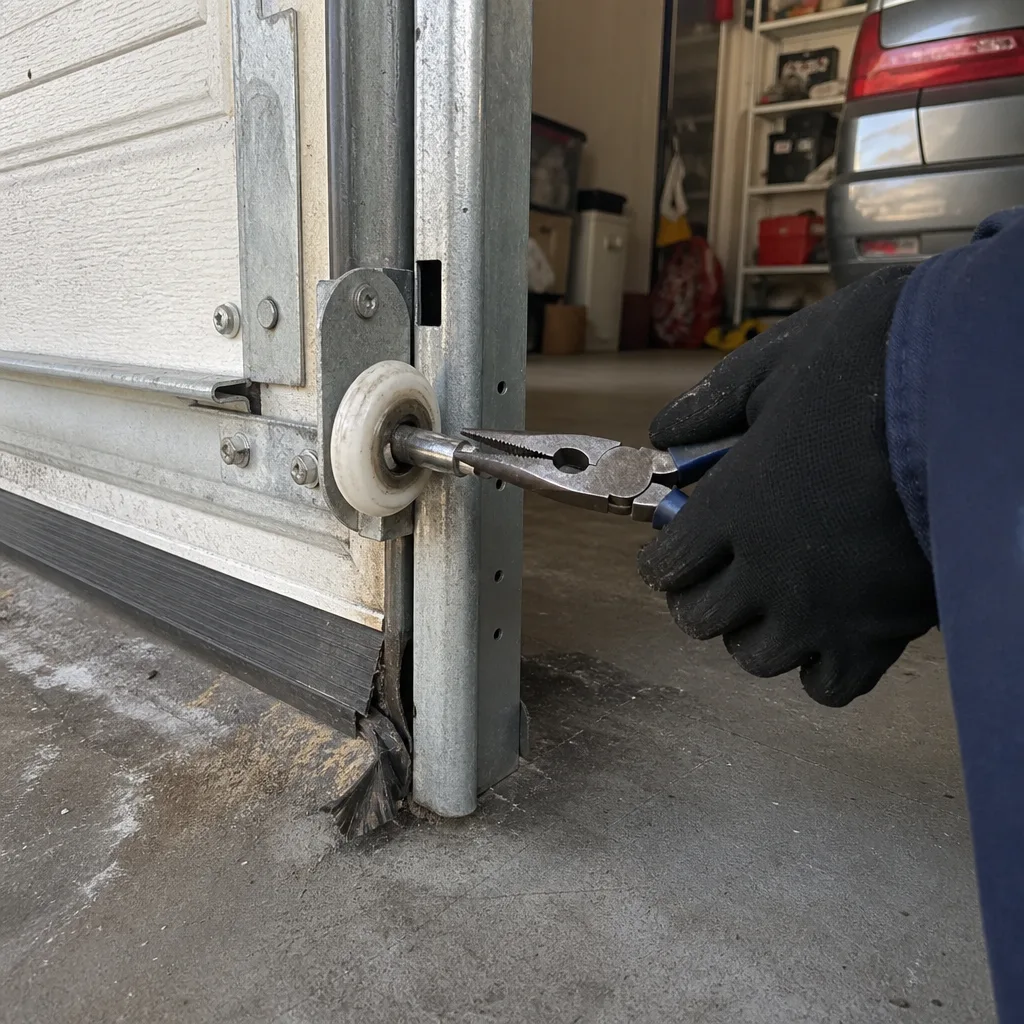
- Apply firm, steady torque. If the bolt turns more than an eighth of a turn, it was backing out. Tighten until snug. Do not overtighten; a stripped lag in wood framing is a repair call, not a hand-tighten.
- Tap the track with the heel of your hand at the midpoint between brackets. Solid, no rattle. Move on.
Homes in older Irvine neighborhoods like Northwood and El Camino Real, where framing has been through 30-plus years of thermal cycling, see more of this than newer construction in the Great Park. The fix is the same either way: a socket wrench and five minutes every six months.
Operator Heat Management: Keeping the Logic Board Alive Through Summer
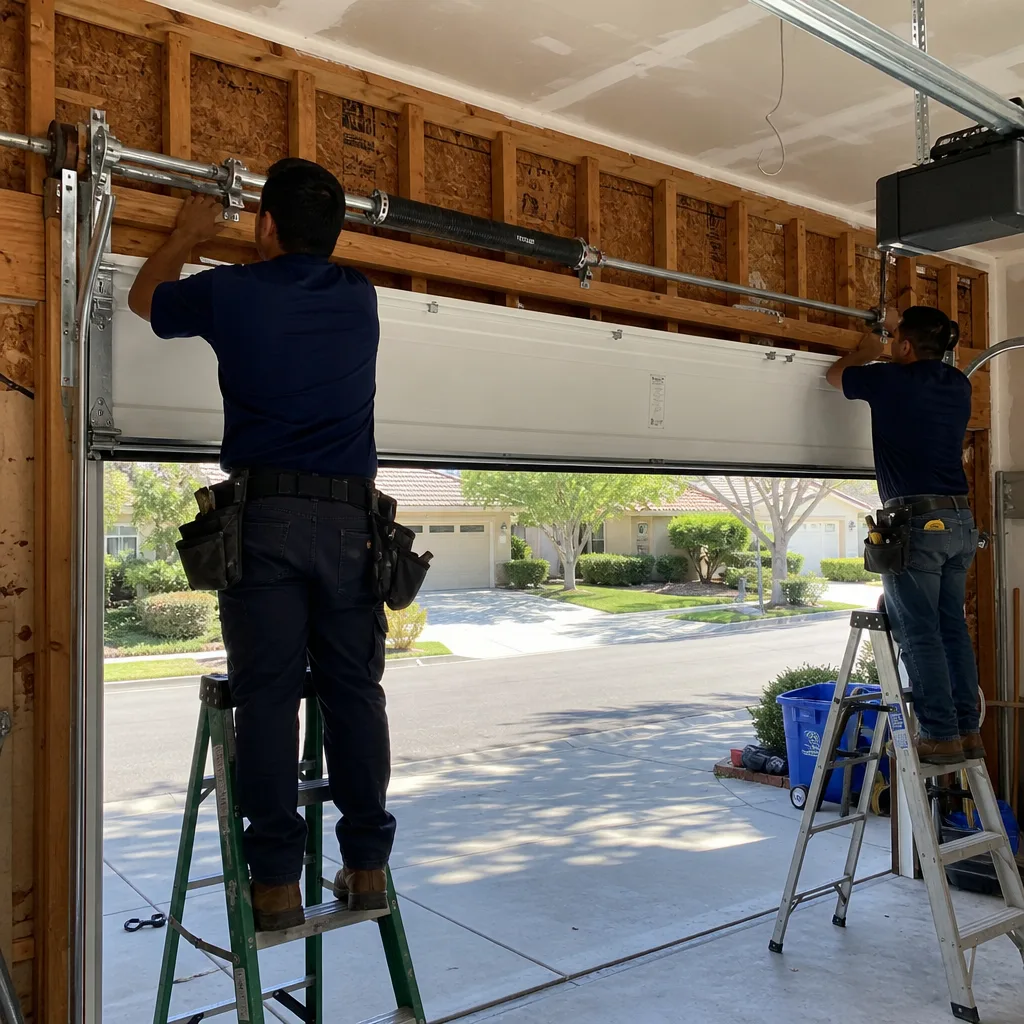
The garage door opener in an attached Irvine garage runs hot in summer. Attached garages without insulation or ventilation routinely reach 110 to 120 degrees Fahrenheit inside during August afternoons. The operator’s logic board, the small circuit board that controls travel limits, force settings, and remote communication, is rated to 140 degrees, but sustained heat at 110-plus shortens its life. Capacitors dry out faster. Solder joints expand and hairline-crack. When the board fails, the symptom is usually a door that works one cycle and stops, or an opener that loses its limit settings between uses.
You cannot add air conditioning to the garage, but you can manage heat load:
- Clear the vent slots. Every operator has ventilation slots on the plastic housing. Inspect them twice a year and vacuum out dust and cobwebs. Blocked vents are the difference between a warm board and a cooked one.
- Check the mounting position. If the operator is mounted where afternoon sun hits it through a window or an uninsulated wall, a simple shade or a sheet of reflective insulation behind the unit drops its operating temperature measurably.
- Adjust the force settings seasonally. In summer, heat makes the door’s torsion springs expand slightly, which reduces their lift force. If the opener’s force setting is marginal, the door will reverse mid-cycle on hot afternoons. This is not a sensor problem; it is thermodynamics. A slight force adjustment or a spring tension check fixes it.
- Open the garage for five minutes before you park. Heat buildup is cumulative. Releasing the day’s thermal load before you close the door reduces the soak that cooks the logic board overnight.
We see this pattern enough in Irvine that our garage door opener repair technicians now check vent-slot debris as part of every diagnostic call. The fix is usually a $0 vacuuming, not a $250 board replacement. When the board has already failed, replacement is the honest answer, and the written quote comes before any work starts.
The Paper-Record Column: What to Log After Every Inspection
Documentation changes how a future repair quote works. If you keep a simple log of your quarterly inspections, a technician can see what you saw, when you saw it, and what changed. That means a more accurate diagnosis and a tighter quote, because the technician starts from your baseline instead of a cold read.
Keep a small notebook in the garage or a note on your phone. Log these items after every inspection:
- Date and condition of torsion springs. Note coil spacing, surface rust rating (1 for clean, 2 for light surface rust, 3 for pitting), and balance test result.
- Bottom seal condition. Note flexibility and whether corner gaps are present.
- Roller and hinge condition. Note any roller wobble or hinge looseness, and what you tightened.
- Lubrication performed. Note what product category you used and which points you hit.
- Operator behavior. Note any reversal episodes, limit changes, or unusual sounds, with the date they first appeared.
- Track fastener torque. Note any bolts that needed tightening and which ones.
This record is the homeowner equivalent of the work documentation we deliver on every service visit. It is the same principle we apply when we photograph the failed component before quoting a replacement: evidence first, then judgment. A homeowner who hands us a year of inspection notes gets a faster, sharper quote, and a homeowner who calls with a documented pattern of spring surface rust progressing from rate 2 to rate 3 knows the replacement is coming and can budget for it on their own schedule rather than on the day the spring breaks.
Common Mistakes to Avoid
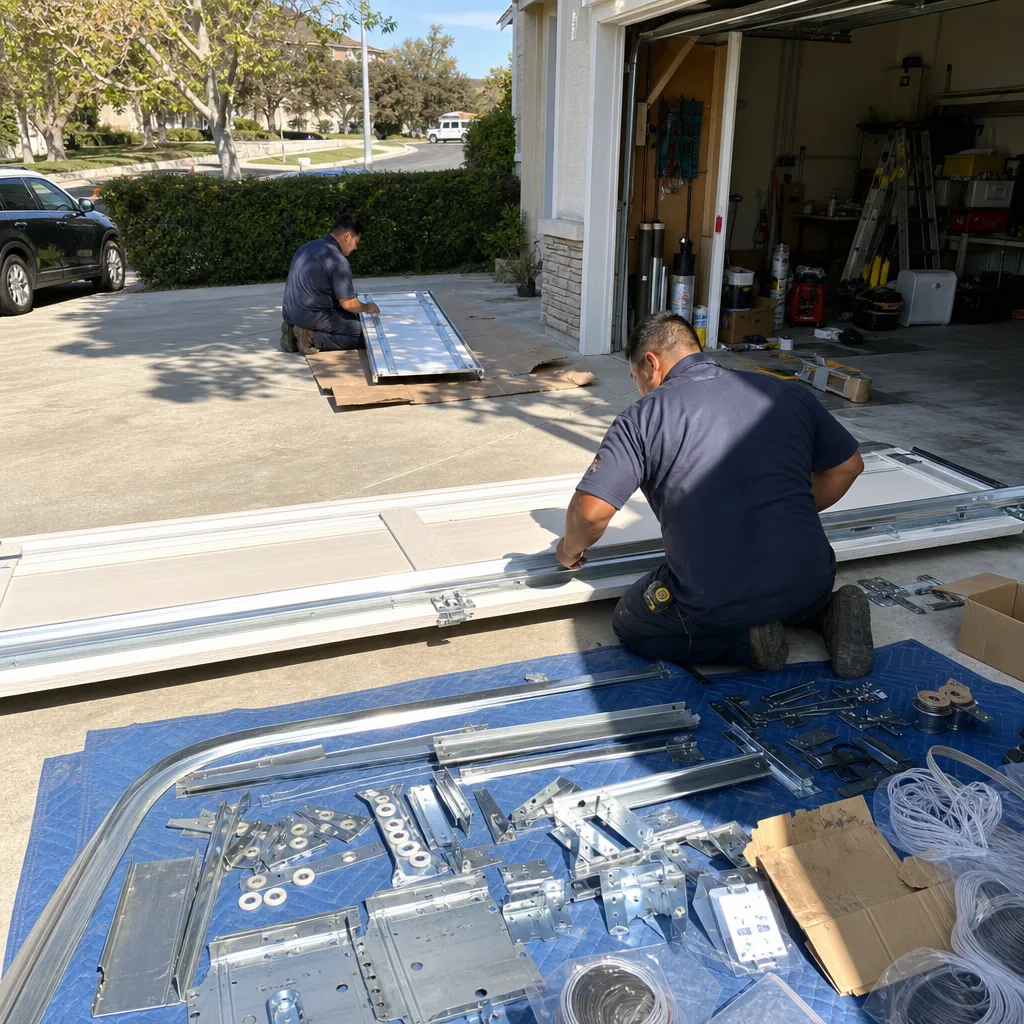
- Lubricating the track. Oil on the track collects Irvine dust and turns it into a grinding compound that wears rollers and track edges. The track should be clean and dry.
- Using WD-40 as a spring lubricant. It strips the light oil film and leaves the coil bare. Use a PTFE or white lithium spray instead.
- Ignoring a door that reverses mid-cycle on hot afternoons. This is usually a spring and force-setting issue, not a sensor problem. Adjusting the sensor closer to the floor masks it and lets the underlying problem worsen.
- Replacing springs without checking the balance. New springs on a door that was running heavy on one side will fail early. The balance test catches the imbalance before it takes out the new set.
- Letting the bottom seal go one more season. A $25 seal replacement now prevents warped panels and water damage that cost an order of magnitude more to fix.
- Ignoring a frayed cable. A cable with three broken strands is a cable that will snap under load. The snap releases the full door weight and bends the panel. This is not a watch-and-wait item.
When to Call a Professional
Some items on this list are safe for a careful homeowner. The balance test, the seal check, lubrication, and fastener torque all fall into that category. The torsion spring itself is not. The spring is under constant tension, and a sudden release can cause serious injury. If your visual check shows a spring with a visible gap, heavy pitting, or a break, do not attempt to adjust or remove it. Call a professional-our How to Hire a Garage Door Contractor in Irvine: A Step-by-Step Guide explains what to expect-who will photograph the failed component, quote a flat price before any work starts, and leave you with a documented record of what was done. Servo Garage Doors Irvine offers free estimates in Irvine - call (949) 569-5773.
Frequently Asked Questions
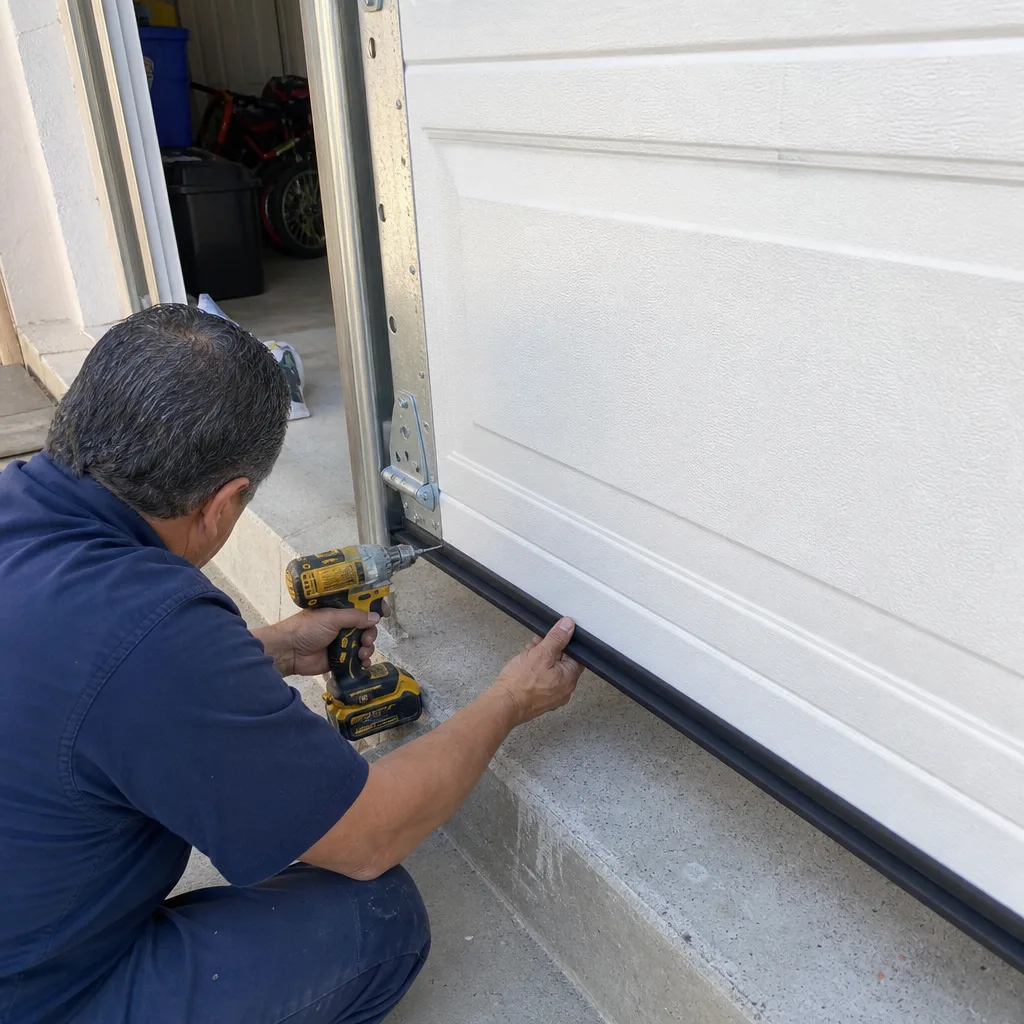
Twice a year is the right cadence for Irvine’s climate: once in early spring before the heat, and once in late fall before the rain. Use a PTFE or white lithium spray on rollers, hinges, and the torsion shaft, and skip the track entirely. Call (949) 569-5773 if you want a technician to do the full lubrication pass and show you the points on your specific door.
If you do it yourself, annual supplies cost $25 to $40: a can of PTFE spray, a replacement bottom seal if needed, and a microfiber cloth. If you hire it out, a maintenance visit in Irvine typically runs $89 to $149 depending on what needs adjusting. Every job we quote gets a flat, written price before we start, so there is no surprise line item.
Heat expands the torsion springs, which reduces their tension and changes how much force the opener needs to move the door. The opener’s force sensor interprets the change as an obstruction and reverses. A spring tension adjustment or a slight force-setting change fixes it, and both are better left to someone who works on springs every day.
We do not recommend it. The torsion spring is under tension, and when it releases unexpectedly, the force is enough to cause serious injury. The work requires winding bars, a tension tool, and training. It is the one component where the savings are never worth the risk.
A torsion spring is rated for about 10,000 cycles, which is roughly seven to ten years for the average Irvine household. Coastal humidity adds surface rust that shortens that lifespan, and homes near the 405 corridor see slightly more cycle load from daily commute patterns. If your balance test shows the door dropping at waist height, the spring is telling you it is time.
We work on LiftMaster, Chamberlain, Genie, Clopay, Amarr, Wayne Dalton, Craftsman, and Raynor, which covers the vast majority of doors installed in Irvine. Our Servo Garage Doors Irvine home page has details on brand coverage and our service area. Every quote is a flat, written price delivered before any work begins.
The Bottom Line
A garage door maintenance checklist for Irvine homeowners is about four things: a quarterly visual inspection, a twice-yearly lubrication pass, a seal check before the rainy season, and a balance test every six months. It takes under an hour per quarter and costs under $50 a year in supplies. What it buys you is the difference between a $20 seal replacement and a $400 panel repair, between catching a spring at rate-2 rust and eating the cost of a broken door at the worst possible time. Keep a log, keep it consistent, and call a professional for anything involving torsion springs. For more guides & resources, see our blog. The documentation is the point; the parts last longer when someone pays attention.
Written by Marcus Deller, Owner at Servo Garage Doors Irvine, serving Irvine since 2015.