
Last updated September 19, 2026
Full 25-point door and opener safety check with every visit - springs, cables, rollers, tracks, and your LiftMaster or Chamberlain opener included
You get a price before we start. It does not change when the truck arrives.
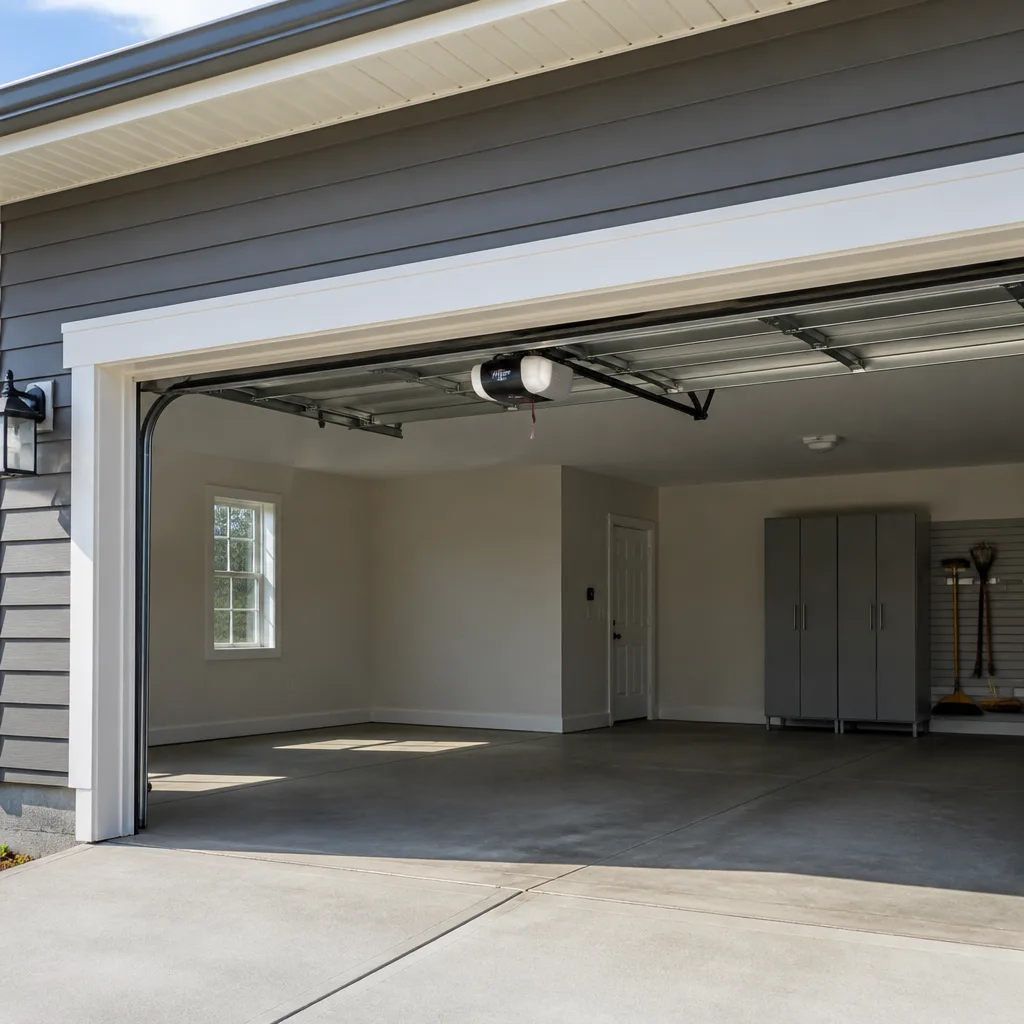
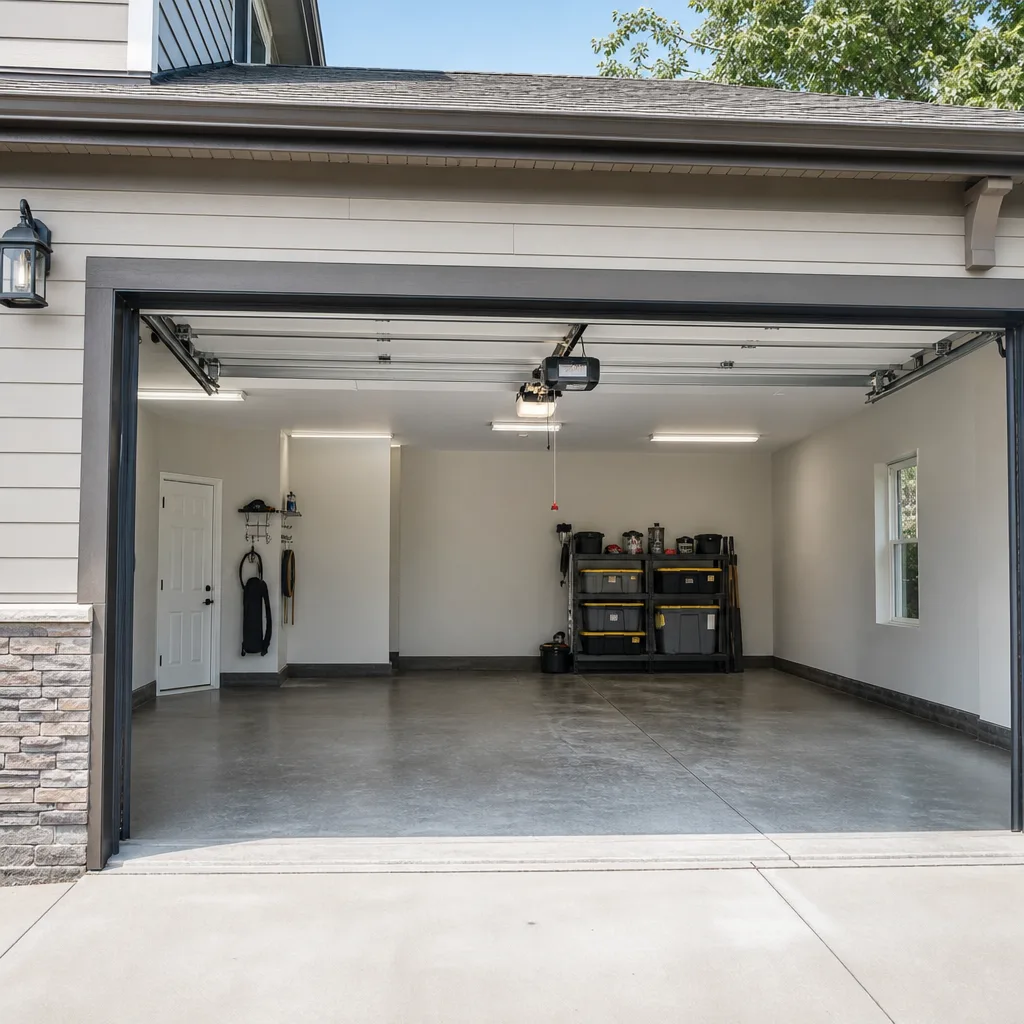
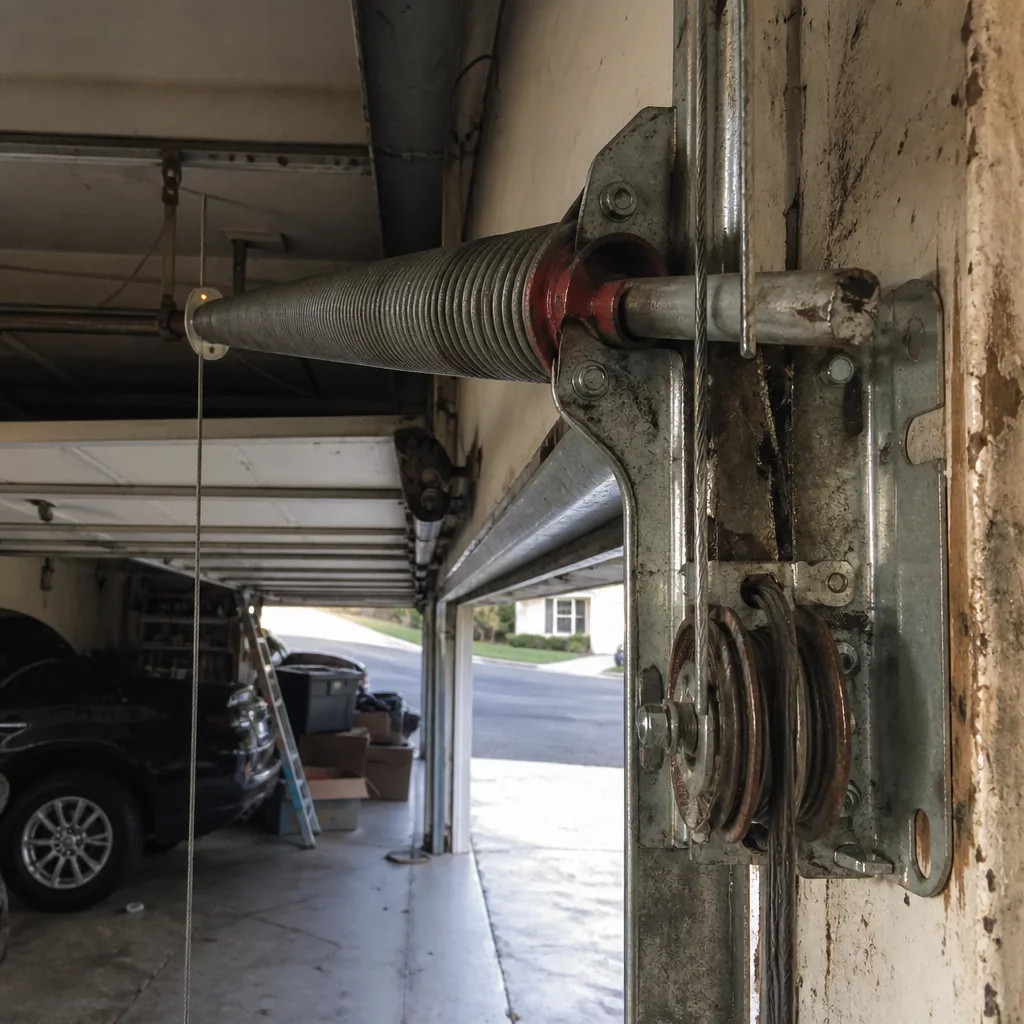 Before
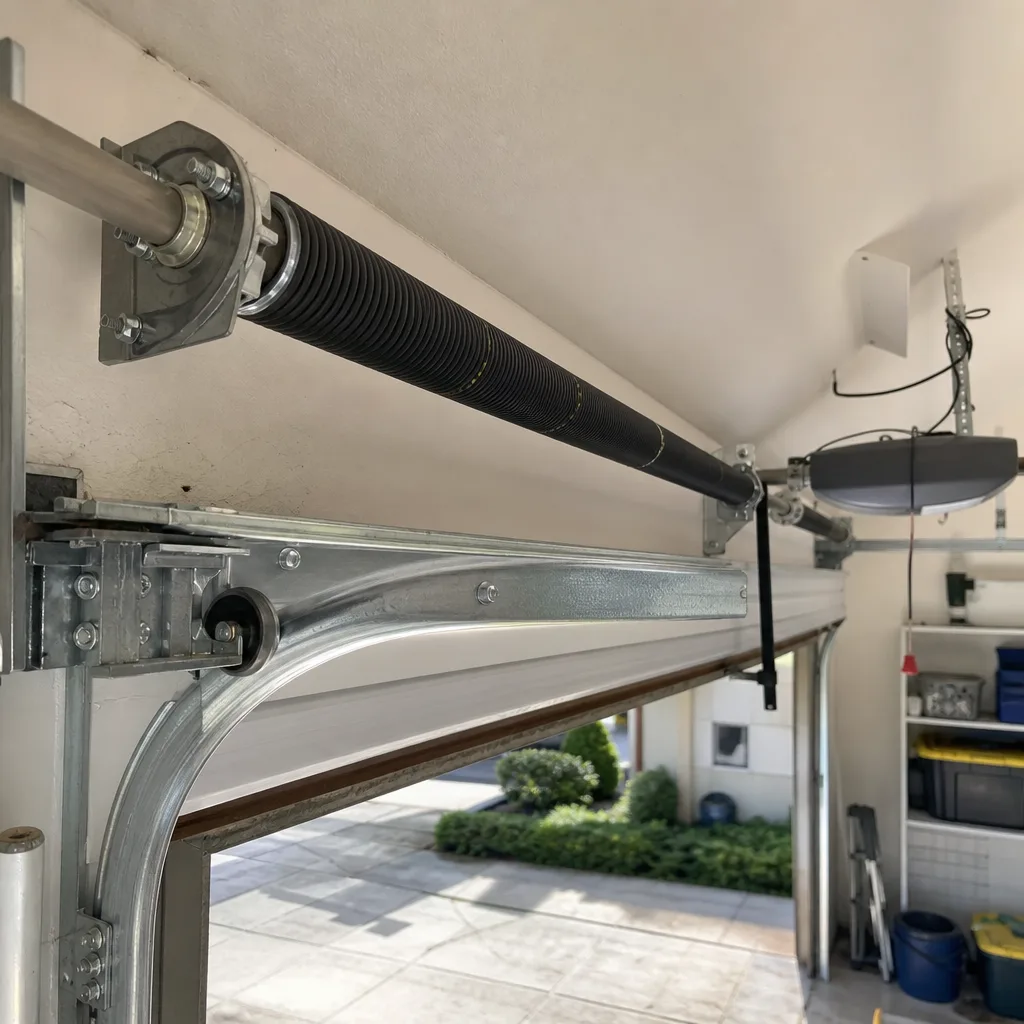 After
After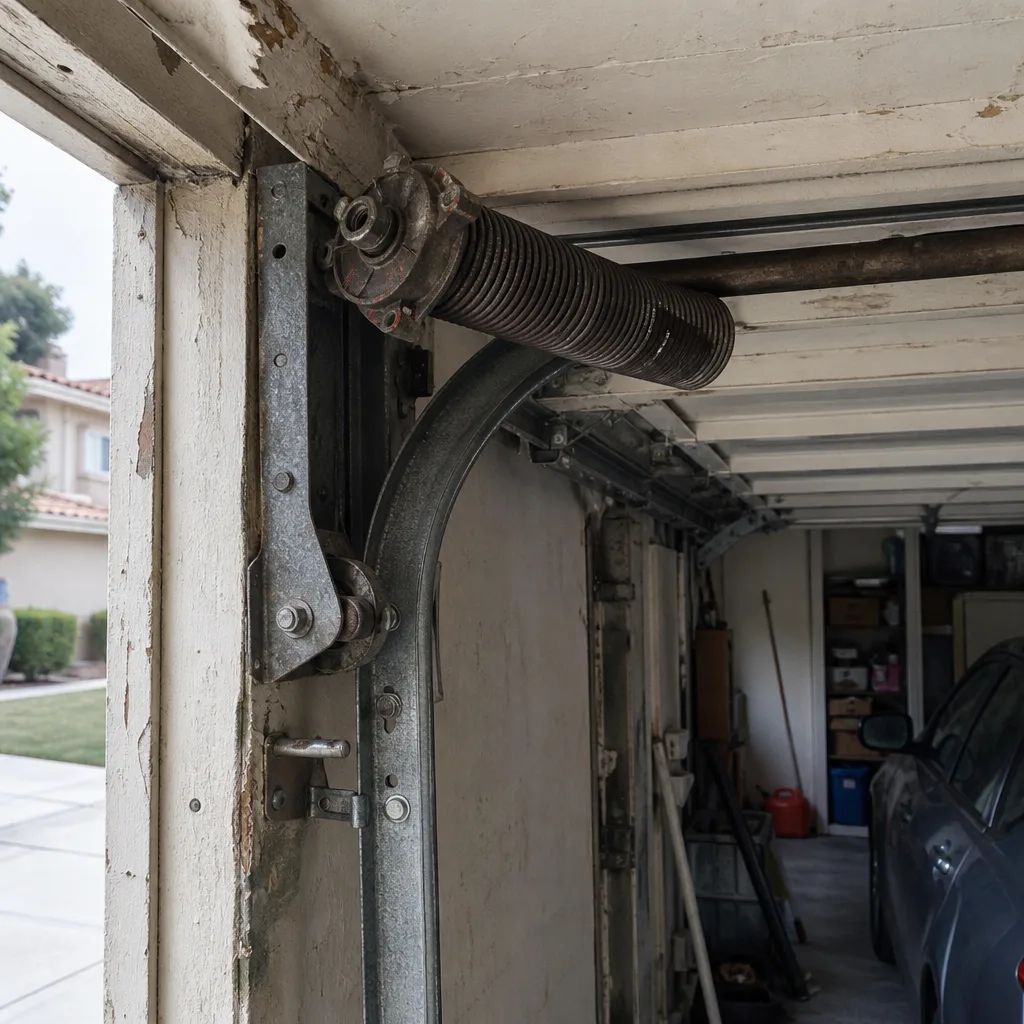 Before
 After
AfterSeasonal Garage Door Care for Irvine: Year-Round Homeowner’s Guide
Irvine gets roughly 12 days of measurable rain per year, which makes it easy to assume your garage door weatherproofing barely matters. That assumption is wrong on a specific, documented schedule. The marine layer deposits enough moisture on coastal-facing hardware between January and May to corrode uncoated torsion springs at a rate comparable to cities receiving 40 inches of annual rainfall, and the summer heat soak inside an Irvine garage regularly pushes interior temperatures past 120°F, which cooks opener logic boards and degrades grease viscosity faster than most national maintenance guides account for. This guide is structured around the stress cycles that actually occur in Irvine, not the generic spring-and-fall checklist copied from Midwest climate guides. For The Complete Guide to Garage Door in Irvine, see our dedicated resource. You’ll learn what to inspect each quarter, what to record, and when a specific condition warrants a professional call.
Quick Answer
Seasonal garage door maintenance in Irvine should be organized around three distinct stress periods: October to November for Santa Ana wind and seal wear, January to May for marine layer moisture and corrosion control, and June to September for interior heat soak and lubricant breakdown. A homeowner doing quarterly inspections with a written log catches most failures before they become emergency calls. If you find a broken torsion spring, a logic board that won’t hold signal, or a door that binds mid-travel, call a professional rather than attempting a repair. See DIY vs Professional Garage Door: The Irvine Homeowner’s Decision Guide to understand when expert help is essential.
Table of Contents
- Santa Ana Season: October – November Maintenance in Irvine
- Marine Layer Season: January – May Corrosion Control
- Heat Soak Season: June – September Garage Door Survival
- The Year-Round UV Factor: Paint, Seals, and Material Selection
- Quarterly Maintenance Log Template for Irvine Homeowners
- What to Lubricate, What to Leave Alone, and When
- Common Mistakes to Avoid
- When to Call a Professional
- Frequently Asked Questions
- The Bottom Line
BeforeAfterSanta Ana Season: October – November Maintenance in Irvine
Santa Ana winds bring single-digit humidity and sustained gusts that push fine dust and debris into every gap in your garage door assembly. In Irvine neighborhoods like Northwood and Woodbridge, where mature eucalyptus and pepper trees line many streets, October also brings leaf litter that packs into bottom seal channels and along the horizontal tracks. The dry air leaches moisture from rubber components at an accelerated rate, which means weather seals that were pliable in September can crack and split by Thanksgiving.
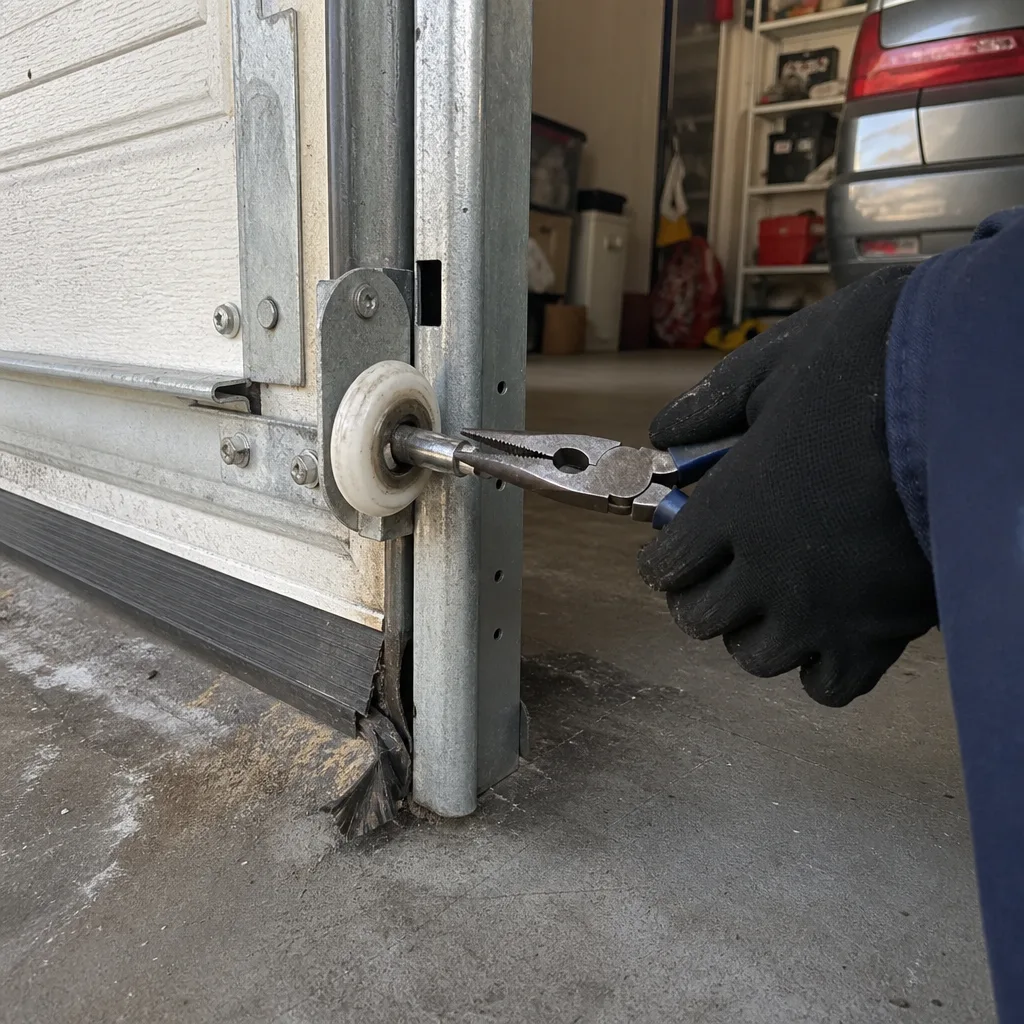
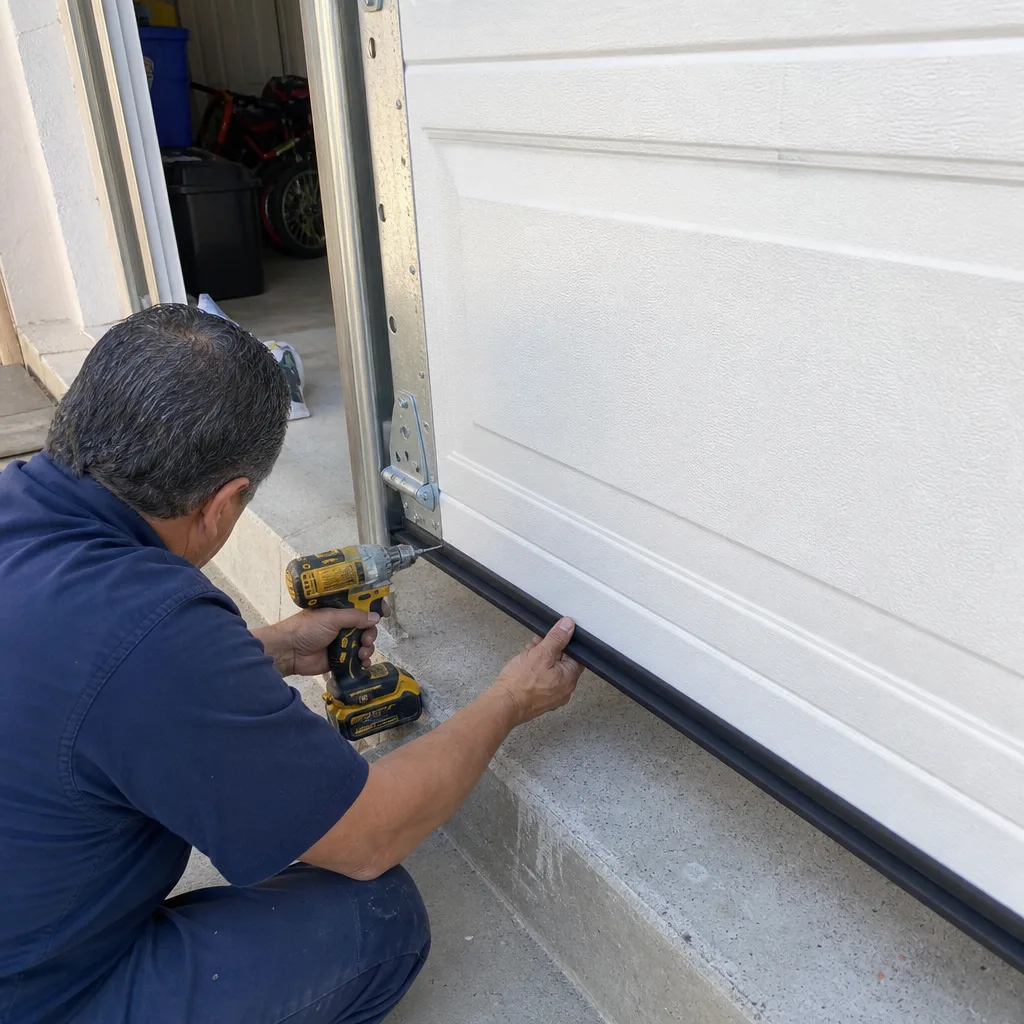
This is the correct time in Irvine to replace your bottom seal. Not spring. By March, the marine layer has already done its work on any seal that survived the Santa Ana season, and you’ve lost months of protection during the period when airborne dust is at its worst. A split bottom seal during Santa Ana events allows fine particulate into the garage, which settles on opener rails, infiltrates the trolley carriage, and accelerates wear on the very components you’re trying to protect.
What to Inspect During Santa Ana Season
- Bottom seal integrity: Run a dollar bill along the seal with the door closed. If the bill slides freely through at any point, the seal has lost compression and needs replacement. A proper seal should create light friction the entire width of the door.
- Side and top weatherstripping: Look for cracks at the corners where the jamb seal meets the header. Santa Ana winds find these gaps and drive dust through them.
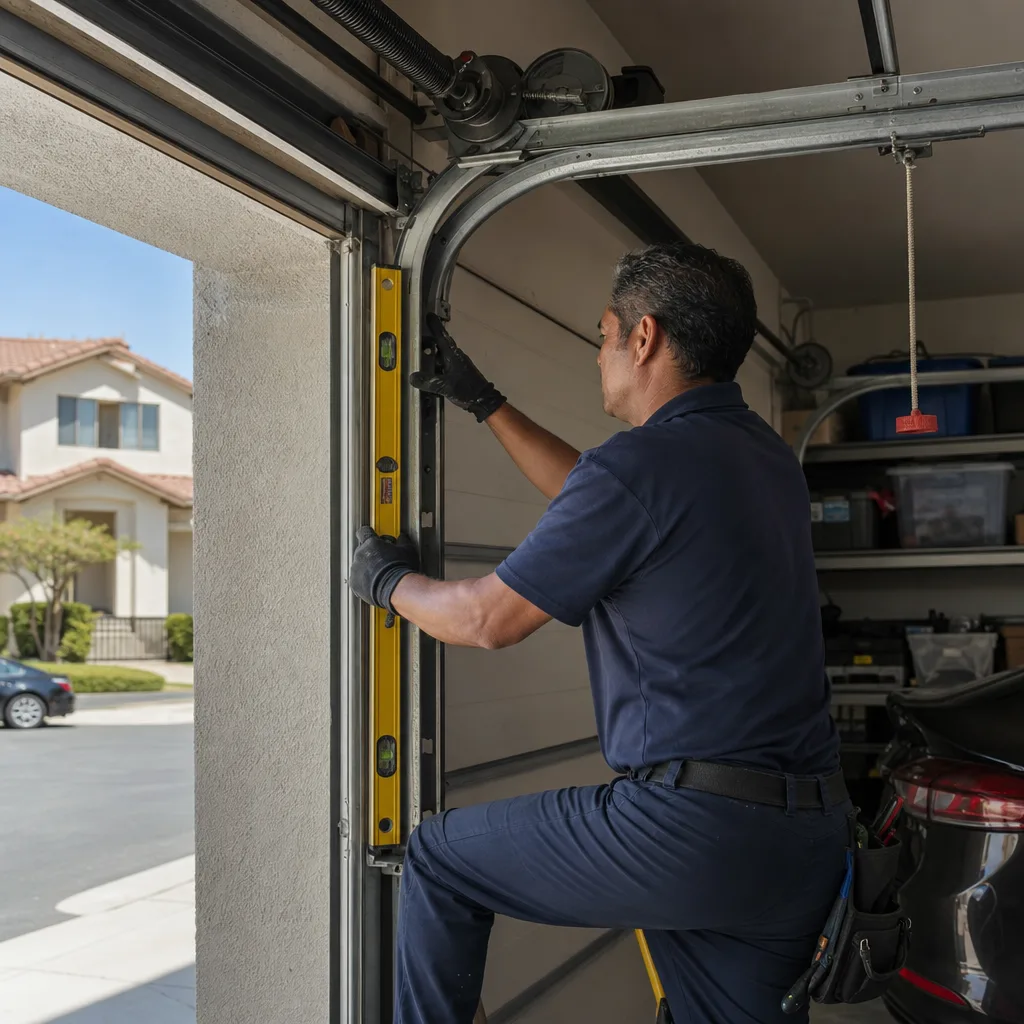
- Track alignment: Gusts don’t bend tracks directly, but they do shake loose mounting bolts over repeated events. Check the vertical track brackets for movement with a gloved hand before lubricating anything.
- Sensor lenses: Dust builds up fast during wind events. Wipe the photo-eye lenses with a dry microfiber cloth. Avoid glass cleaner; ammonia breaks down the plastic housing over time.
If you’re replacing a bottom seal yourself, buy the T-style or bulb seal that matches your existing retainer profile. Measure the width of the door and cut the seal an inch long rather than an inch short; the extra compression at the ends creates a better corner seal. Most Irvine homeowners can do this job in under thirty minutes with basic tools. Garage Door Repair in Irvine covers what we handle when a seal replacement reveals damage to the retainer channel itself.
Santa Ana Maintenance Steps
- Close the door and inspect the bottom seal from inside with a flashlight. Look for daylight visible through any gap.
- Check all exterior weatherstripping for cracks, brittleness, or gaps at the corners.
- Wipe the photo-eye lenses on both sides of the door opening with a dry cloth.
- Tighten any loose track brackets with a socket wrench. Do not overtighten; snug plus a quarter turn is enough.
- Apply a silicone-based lubricant to hinges and rollers if you hear squeaking during operation.
- Record seal condition in your maintenance log with a numerical rating from 1 to 5, where 5 is new condition.
Marine Layer Season: January – May Corrosion Control
The marine layer that blankets Irvine from January through May delivers consistent overnight humidity between 70 and 85 percent, often with visible fog by morning. This moisture settles on every exposed metal surface in your garage, but it concentrates where air movement is lowest: along the torsion spring coils, on the bearing plates at each end of the spring tube, and inside the hinge pivot points. In coastal-adjacent Irvine neighborhoods like Turtle Rock and Quail Hill, the effect is strong enough that uncoated torsion springs show surface rust within eighteen to twenty-four months of installation.
Surface rust on a torsion spring is not immediately dangerous, but it accelerates fatigue. The corrosion creates microscopic pits in the wire surface, and those pits become stress concentrators that reduce the spring’s effective cycle life. A spring rated for 10,000 cycles might fail at 6,000 or 7,000 if surface corrosion is left untreated. Springs fail in Irvine at predictable points: the break almost always occurs at the first quarter turn from the stationary cone, where stress is highest and the factory coating has been worn by contact friction.
Identifying Early vs. Structural Corrosion
- Early surface rust: A powdery orange-brown film that wipes off partially with a dry rag. The spring wire still shows its factory coating underneath. Treat this with a corrosion inhibitor immediately.
- Structural corrosion: Pitting visible as small craters in the metal, scaling that flakes off in sheets, or wire diameter visibly reduced anywhere along the coil. If you see this, call a professional before the spring snaps.
- Hinge and roller rust: Look for rust-colored staining running down from the hinge barrels. This indicates moisture working its way through the pivot point, which means the internal bearing surface is also degrading.
For early surface rust, the correct inhibitor for marine layer moisture in Irvine is a lanolin-based spray, not WD-40. WD-40 is a water displacer and light penetrant, not a long-term corrosion barrier. Lanolin forms a waxy film that resists the humid overnight conditions for weeks at a time. Apply it to torsion spring coils in a thin, even coat. Do not apply to rollers or hinges; the lanolin attracts dust and creates a grinding paste inside pivot points. Garage Door Opener Repair & Installation in Irvine documents what we see when moisture reaches the logic board through corroded mounting hardware.
Marine Layer Corrosion Control Steps
- Inspect all torsion hardware with a flashlight in the early morning, when condensation is still visible.
- Wipe down the torsion spring with a dry microfiber cloth to remove accumulated moisture.
- Apply a lanolin-based corrosion inhibitor to the spring coils with a light, even coat.
- Check the bearing plates at both ends of the spring tube for rust trails extending to the wall brackets.
- Open and close the door twice while watching the spring for any wobble or uneven coil spacing; those are early indicators of internal fatigue.
- Log the date, observed condition, and treatment applied in your maintenance record.
Heat Soak Season: June – September Garage Door Survival
An Irvine garage with a south-facing or west-facing exposure can hit 120°F by mid-afternoon between June and September. Even a north-facing garage in a shaded neighborhood like University Park will exceed 100°F on a 95°F day. This sustained heat does three specific things to your garage door system: it degrades the electrolytic capacitors on opener logic boards, it thins bearing grease to the point where it drips out of roller housings, and it softens PVC bottom seals until they deform against the slab and lose their compression memory.
The logic board failure point deserves attention because it fails slowly. Capacitors rated for 105°C operation lose their ability to hold charge after enough hours above 90°C, which in an Irvine summer garage means the board degrades every afternoon for four months straight. The first symptom is usually intermittent operation: the opener works in the morning, fails in the afternoon, and works again after sunset. By the time the failure is consistent, the capacitor is gone and the board needs replacement. Running a fan or installing a garage vent reduces this heat load measurably. Even a 10°F reduction in peak interior temperature extends logic board life meaningfully.
Heat-Related Maintenance Tasks
- Grease viscosity check: Look at the roller housings. If you see grease streaking down the stem below each roller, the grease has thinned and is migrating out of the bearing. This is the time to clean and re-lubricate with a white lithium grease rated for high-temperature use.
- Bottom seal compression test: Run the dollar bill test again in July. If the seal passes in October but fails in July, heat deformation is the cause, not abrasion. A deformed seal may recover partially when temperatures drop, but the memory is compromised.
- Opener cooling: If your opener is installed on the ceiling near the door, the heat rising from the door surface adds direct thermal load. Check that the opener’s ventilation slots are clear of dust. A small fan moving air across the opener housing during peak temperature months reduces board degradation.
- Chain or belt tension: Heat expands metal. A chain that was properly tensioned in January will be slightly loose in August. A belt that was tight in winter will be looser too. Check the tension at the midpoint of the rail; you should see no more than half an inch of deflection.
- Steel with standard polyester paint: Expect chalking on south-facing surfaces by year three. Apply a UV-rated clear coat before chalking begins, not after.
- Steel with factory UV-stable finish: Plan to evaluate at year five. Touch up any scratches with matching paint that includes UV inhibitors.
- Aluminum frame with glass or infill panels: Watch the anodized frame edges for clouding. Once clouding starts, it spreads. There is no practical restoration; plan for replacement.
- Wood with site-applied paint: Inspect every joint and fastener head each spring. Repaint any area where you can see cracking before the marine layer season starts.
- Date and season marker: Note which stress period you’re in (Santa Ana, marine layer, heat soak, or transition). This matters because the same observation means different things in different seasons.
- Bottom seal condition: Rate 1-5, where 5 is new condition. Note whether the seal fails the dollar bill test and at which point along the door width.
- Torsion spring appearance: Note any rust color change, coil spacing irregularity, or new noise during operation.
- Roller and hinge condition: Rate noise from 1-5 and note any visible grease migration or rust staining.
- Opener behavior: Record any intermittent operation, slow response, or unusual noise during the open/close cycle.
- Door balance test result: Disconnect the opener and lift the door manually to shoulder height. It should stay in place. If it drifts down, the springs are losing tension. Note how far it drifts in five seconds.
- Any action taken: Lubricant applied, seal replaced, corrosion inhibitor coated. This creates the history you compare against next year.
- Hinges: A light coat of white lithium grease on the pivot pin only. One small drop per hinge, applied twice per year in April and October. No more.
- Rollers with metal bearings: White lithium grease inside the bearing, not on the roller face. If your rollers are nylon with sealed bearings, do not lubricate them. They are sealed for a reason.
- Torsion spring coils: A silicone spray on the surface helps prevent coil-to-coil friction and provides minor corrosion protection. Apply lightly in April and October.
- Track: Nothing. The tracks should be dry. Rollers roll on the track surface; any lubricant there collects dust and creates friction, not reduces it.
- October: Lubricate hinges and torsion spring. This prepares the door for Santa Ana dust season with the minimum amount of wet surface area.
- April: Lubricate hinges and torsion spring. This applies corrosion protection before the marine layer season’s humidity peak.
- Skip: Do not lubricate in summer. The heat thins whatever is on there anyway, and excess lubricant drips onto the door surface and slab.
- Following a generic spring-and-fall maintenance schedule. Irvine has no real winter, so the spring checkup model doesn’t map to the stress cycles that actually occur here. Schedule around Santa Ana season, marine layer season, and heat soak season instead.
- Replacing weather seals in spring. By March, the seal has endured the dust and low humidity of Santa Ana season and the moisture of marine layer season. October replacement prepares the door for the most abrasive period of the year.
- Using WD-40 on torsion springs. It displaces water briefly and then evaporates, leaving the spring unprotected and attracting dust. Use a lanolin-based inhibitor for corrosion or silicone spray for coil friction.
- Lubricating the tracks. This is the most common DIY error we see in Irvine garages. Tracks should be clean and dry. Lubricant on tracks doubles the rate of roller and track wear by turning dust into abrasive paste.
- Ignoring intermittent opener behavior in summer. An opener that works in the morning and fails in the afternoon is showing you capacitor degradation from heat soak. Fixing it in October after it stops working entirely costs more than addressing the cause in August.
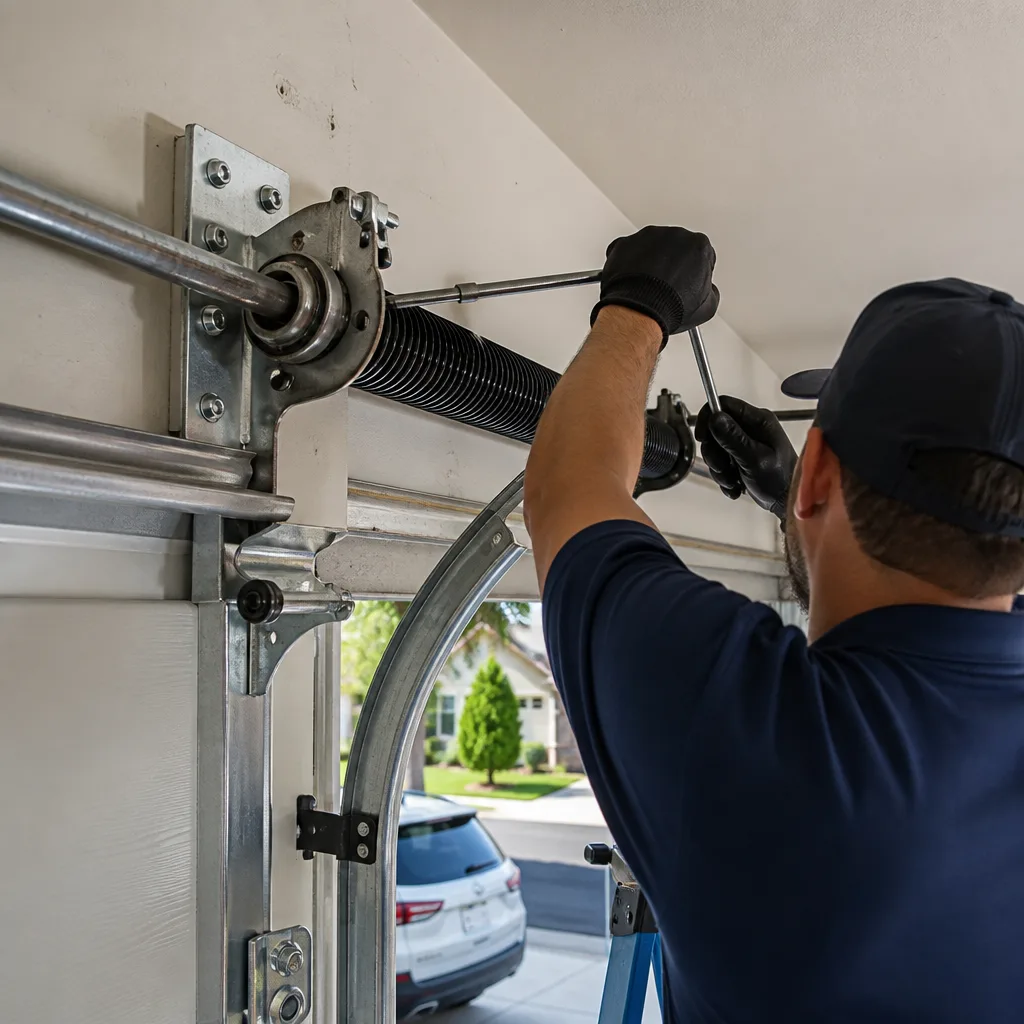
- Attempting to adjust torsion spring tension without proper tools. Torsion springs are under enough tension to cause serious injury. A winding bar slipping out of the cone can break bones. This is not a DIY adjustment. In our experience, the homeowners who call us after attempting spring work spend more on repairing secondary damage than the original service would have cost.
- Assuming a south-facing steel door will hold its finish without intervention. Standard polyester paint on steel begins chalking within three years on Irvine’s southern exposures. A UV-rated clear coat applied before chalking starts extends the finish significantly.
LiftMaster and Chamberlain openers both use capacitors from the same supplier class, and both show the same heat-related failure pattern in Irvine garages. Genie’s newer models add a heat sink to the logic board housing, which helps, but doesn’t eliminate the problem. The single most effective mitigation is ventilation. If your garage has no cross-ventilation, adding a vent on the wall opposite the door changes afternoon peak temperatures by more than any other single modification. Garage Door Installation in Irvine covers how we factor heat exposure into door and opener recommendations when the time comes for replacement.
The Year-Round UV Factor: Paint, Seals, and Material Selection
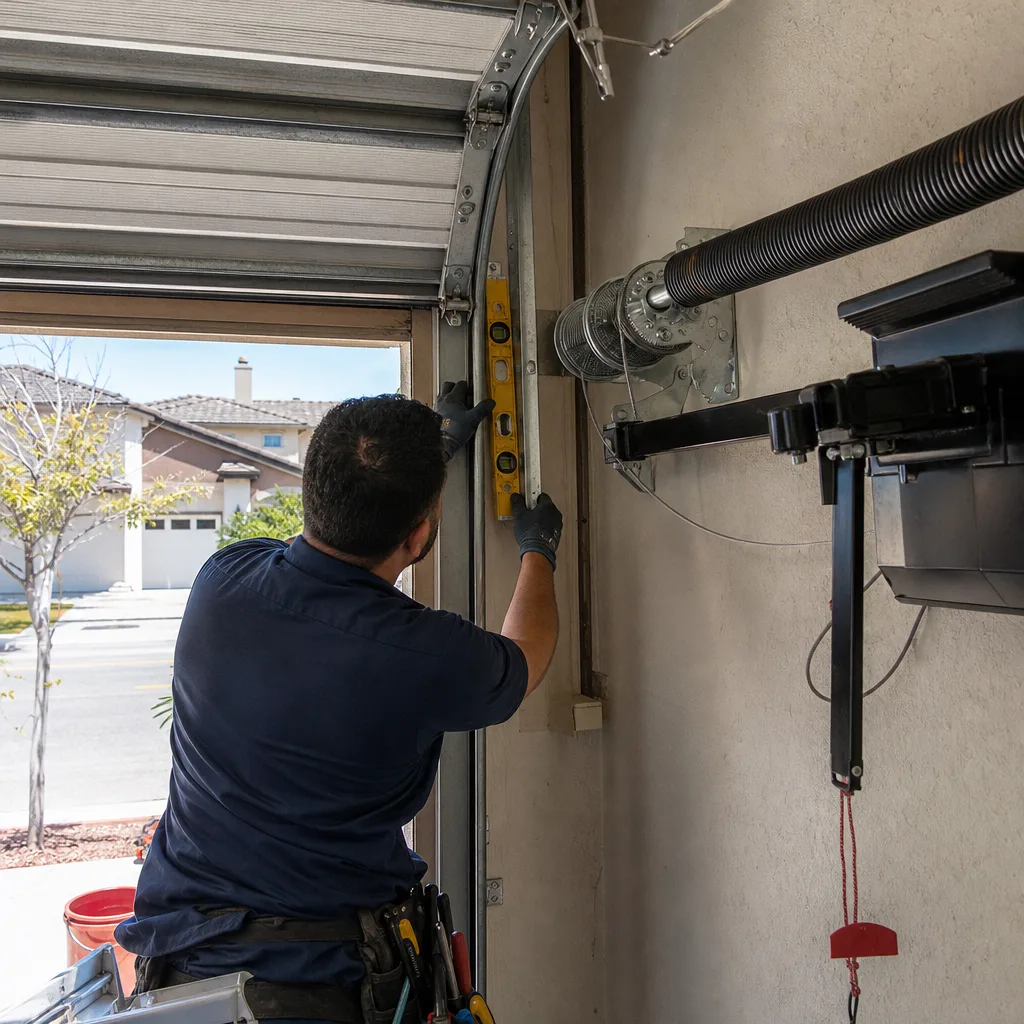
Irvine averages over 280 days of sun annually, and a south-facing garage door absorbs roughly 40 percent more UV radiation than a north-facing door on the same street. This creates a material-specific failure schedule that most national guides ignore. Steel doors with a standard polyester paint finish begin showing chalk on south-facing surfaces within three years in Irvine. The same door with a UV-rated topcoat holds color for six or more. The difference matters because chalking is not cosmetic: it means the paint binder is breaking down, and once the binder fails, the underlying galvalume steel is exposed to moisture from the marine layer season.
Aluminum doors avoid the rust problem but develop oxidation clouding on anodized frames faster than steel doors chalk. Wood doors in Irvine face a different failure mode: the constant expansion and contraction cycles from daily temperature swings pull fasteners loose and crack the paint at joints within two years, letting moisture into the wood grain. Clopay’s polyurethane-insulated steel with a factory-applied UV-stable finish is the most durable common configuration for Irvine’s southern exposures, but any steel door with proper topcoat maintenance will outlast an equivalent wood door in this climate.
UV Protection by Material
Vinyl trim and PVC bottom seals share the same UV vulnerability. A PVC bottom seal in a south-facing Irvine garage door becomes brittle within two to three years and cracks when compressed. This is why the Santa Ana season replacement schedule matters: by October, the seal has absorbed a full summer of UV and lost its flexibility. Replacing it before the winds arrive means the new seal is pliable enough to maintain its compression when dust and debris push against it.
Quarterly Maintenance Log Template for Irvine Homeowners
The single highest-value habit an Irvine homeowner can develop is recording observations on a fixed quarterly schedule. Without a written record, you cannot tell whether a component is degrading faster this year than last year, and you cannot distinguish normal wear from an accelerating failure. The log does not need to be elaborate; a notebook page or a digital note works. What matters is consistency and specificity.
What to Record Each Quarter
After two years of quarterly logs, you will see patterns. A spring that showed first surface rust in February and progressed to structural corrosion by the following January despite treatment tells you the treatment interval needs tightening. A bottom seal that passed the dollar bill test in October but failed by July tells you UV degradation is outpacing abrasion and you may want a different seal compound. The log turns vague worries into documented trends, and it gives any technician you call a baseline to work from. We ask customers about their maintenance history on every visit; a log makes that conversation fact-based instead of memory-based. This approach matches how Servo Garage Doors Irvine structures every service visit: the photo record you receive documents what was found and what was done, giving you the same evidence trail for professional work that your log provides for routine care. Servo Garage Doors Irvine home explains that documentation standard in more detail.
What to Lubricate, What to Leave Alone, and When
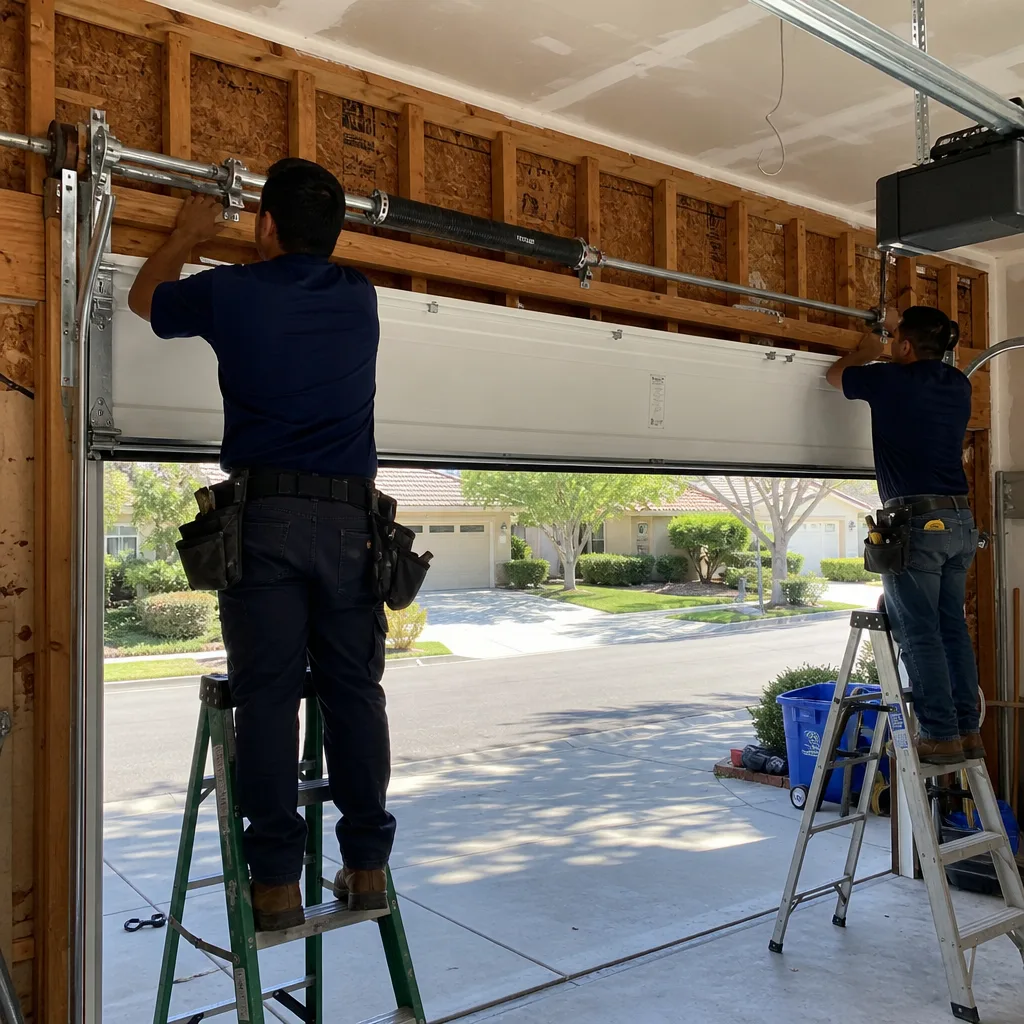
Lubrication mistakes cause more garage door problems in Irvine than neglect does. The dry climate encourages over-lubrication, because homeowners assume things need more oil in dry conditions. The opposite is true for most components. Excess lubricant attracts dust, and dust in Irvine includes fine abrasive particulate from decomposed granite landscaping and construction activity. That dust combines with wet lubricant to create a grinding compound inside pivot points.
Components to Lubricate
Lubrication Schedule for Irvine
If your door squeaks persistently after lubrication, the sound is not a lubrication problem. Squeaking means metal-on-metal contact that grease cannot address: a worn roller bearing, a hinge pin that has worn through its bushing, or a spring coil rubbing against the stationary cone. Diagnosing that correctly requires getting eyes on the moving parts while the door operates. We do that on every Garage Door Repair in Irvine visit, and the photo record shows you exactly what was wearing.
Common Mistakes to Avoid
When to Call a Professional
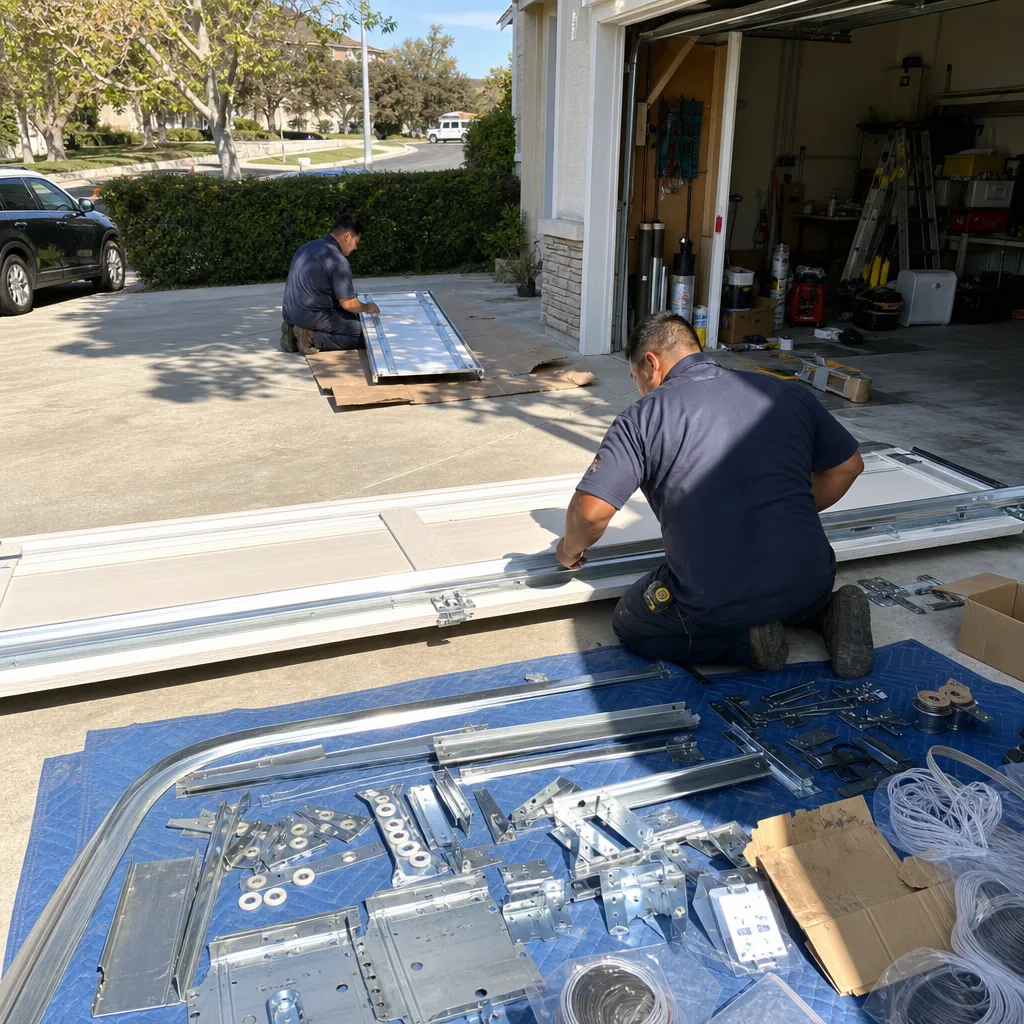
A broken torsion spring is not a maintenance item. If you hear a loud bang from the garage and find the door won’t lift, the spring has failed and the door may weigh 150 to 300 pounds with no counterbalance. Do not attempt to lift it manually. Call a professional.
Other conditions that warrant a technician: a door that binds or jerks during travel after you’ve confirmed the tracks are clean and the rollers are intact, an opener that produces a grinding sound or fails to respond to both wall panel and remote, a cable that has come off the drum, or any rust on the spring coils that has progressed to pitting or visible diameter reduction. These conditions involve high-tension components or mounting hardware under load, and the failure mode is sudden. Servo Garage Doors Irvine offers free estimates throughout Irvine. Call (949) 569-5773 and we’ll send a technician with the tools to diagnose the problem and a written price before any work starts.
Frequently Asked Questions
Quarterly inspections with targeted maintenance in October and April are sufficient for most Irvine garage doors. The October pass prepares the door for Santa Ana dust and includes bottom seal inspection and hinge lubrication. The April pass applies corrosion protection before marine layer humidity peaks. The quarterly inspections between those dates catch issues while they are still cheap to fix. If your door faces south or west and absorbs full afternoon sun, inspect the bottom seal monthly during summer.
Heat thins the lubricant on hinges and bearings in your Irvine garage, causing metal components to make contact where grease once separated them. The squeak disappears in the evening when temperatures drop and the lubricant thickens again. If the squeak persists after April and October lubrication, the noise indicates a worn roller bearing or hinge bushing that needs replacement rather than more lubricant. Call (949) 569-5773 for an inspection and a written price before any repair work begins.
A replacement bottom seal for a standard residential door in Irvine typically costs $40 to $80 for the seal material if you install it yourself, or $120 to $200 for professional installation that includes trimming to fit and verifying the seal compression across the full door width. For full pricing context, see our Garage Door Cost Breakdown: The Irvine Homeowner’s Reference for 2026. The price depends on the seal profile and door width. Servo Garage Doors Irvine provides a flat, written price before any seal replacement work starts, so the number you approve is the number you pay.
Replace the bottom seal in October, before Santa Ana season. The seal has absorbed a full summer of UV exposure by then and will be near the end of its useful flexibility. Installing a fresh seal before the wind season ensures maximum compression when it matters most, keeping dust and debris out of the garage during the driest, dustiest months of the year. Spring replacement leaves the door poorly sealed during the most abrasive period.
Yes. Marine layer humidity settles on the torsion spring coils overnight and creates the moisture film needed for corrosion. Uncoated springs in coastal-adjacent Irvine neighborhoods such as Turtle Rock and Quail Hill show surface rust within eighteen to twenty-four months. Left untreated, surface rust progresses to pitting and reduces the spring’s cycle life significantly. Regular application of a lanolin-based inhibitor during the January to May season slows this process.
The logic board’s capacitors lose their ability to hold charge when subjected to sustained high temperatures, and an Irvine garage facing the afternoon sun can exceed 120°F for hours at a time between June and September. The first symptom is intermittent operation: the opener works in the morning and fails in the afternoon. Adding ventilation or a fan that moves air across the opener housing reduces the heat load and extends logic board life. If the opener is already failing intermittently, call (949) 569-5773 for a diagnosis and a written price before any repair or replacement.
The Bottom Line
Irvine’s garage door stress cycles do not follow the seasons that appear on a national maintenance calendar. The Santa Ana winds in October and November dictate seal replacement timing. The marine layer from January through May drives corrosion control. The summer heat soak from June through September demands attention to logic boards, grease viscosity, and seal deformation. A quarterly log transforms these observations into a documented trend line, and a few well-timed actions each year prevent most emergency failures entirely. Explore more guides & resources to keep your system running smoothly. When a failure does involve a torsion spring, cable, or high-tension component, the safest choice is a professional who quotes a written price before starting work and documents the findings with photos. That is the standard we work to on every Irvine job.
Written by Marcus Deller, Owner at Servo Garage Doors Irvine, serving Irvine since 2015.